IRONMAN 70.3 Dhofar takes place at Hawana Salalah, Oman, on Saturday, 24 October 2026.
For professional athletes and podium or PB contenders, the challenge is sustaining an efficient swim and arriving at T1 to bike and arriving at T2 in Salalah’s warm weather conditions.
| Official event name | Experience Oman IRONMAN 70.3 Dhofar |
|---|---|
| Date | Saturday, 24 October 2026 |
| Location | Hawana Salalah, Dhofar, Oman |
| Total distance | 113km / 70.3 miles |
| Swim | 1.9km bay swim |
| Bike | 90km rolling course |
| Run | 21.1km flat course |
| Entry options | Individual and relay |
| Registration | Currently open |
| Official event page | IRONMAN 70.3 Dhofar |
| Official registration | Register through IRONMAN |
The final athlete guide will confirm the detailed route, elevation, aid stations, cut-off times and rules of the race. Use official 2026 information—not historical course data—as the final authority.

Coach de Bruin’s Assessment of IRONMAN 70.3 Dhofar
IRONMAN describes Dhofar as a bay swim, rolling bike and flat run. That profile may look fast, but it rewards control. The result is likely to depend on how well you preserve speed when bike fatigue, fuelling and heat begin to affect your run.
Before setting a target, Coach de Bruin establishes an athlete-specific bike ceiling, tests nutrition at that output and confirms whether the athlete can reproduce the required run intensity afterwards.
If power is still on target but HR or RPE climbs earlier than expected, I treat it as a “cost is rising” signal—usually heat, dehydration/fueling, poor sleep/stress, or early fatigue—so I don’t chase intensity.
I’ll first control the controllable (cooling, fluids/electrolytes, carbs, pacing discipline) and, if the drift persists for ~10–15 minutes, I cap the session by HR/RPE (or shorten it) to protect the training objective and recovery.
– Coach de Bruin
Swim Strategy: Spend Energy Deliberately
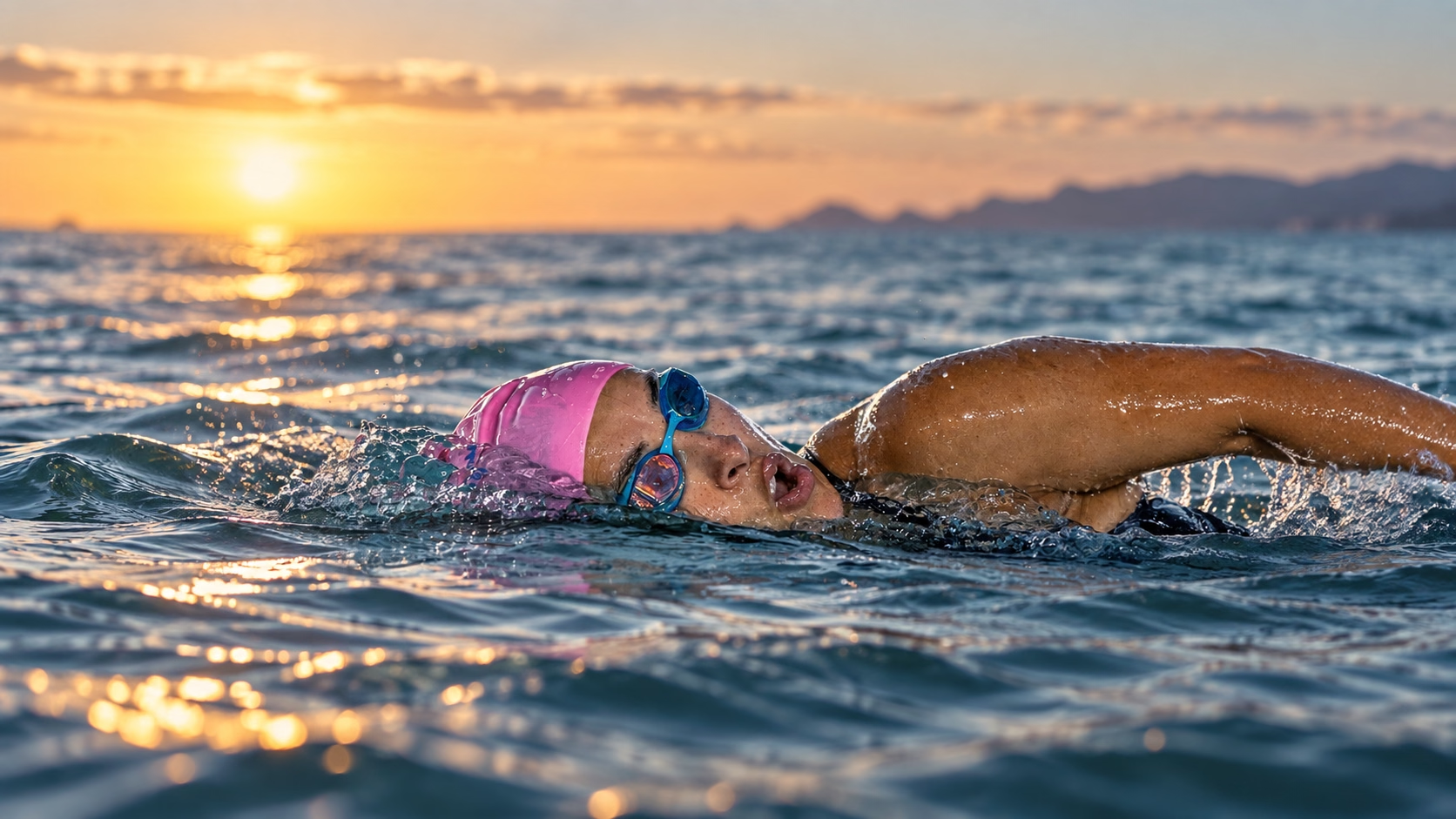
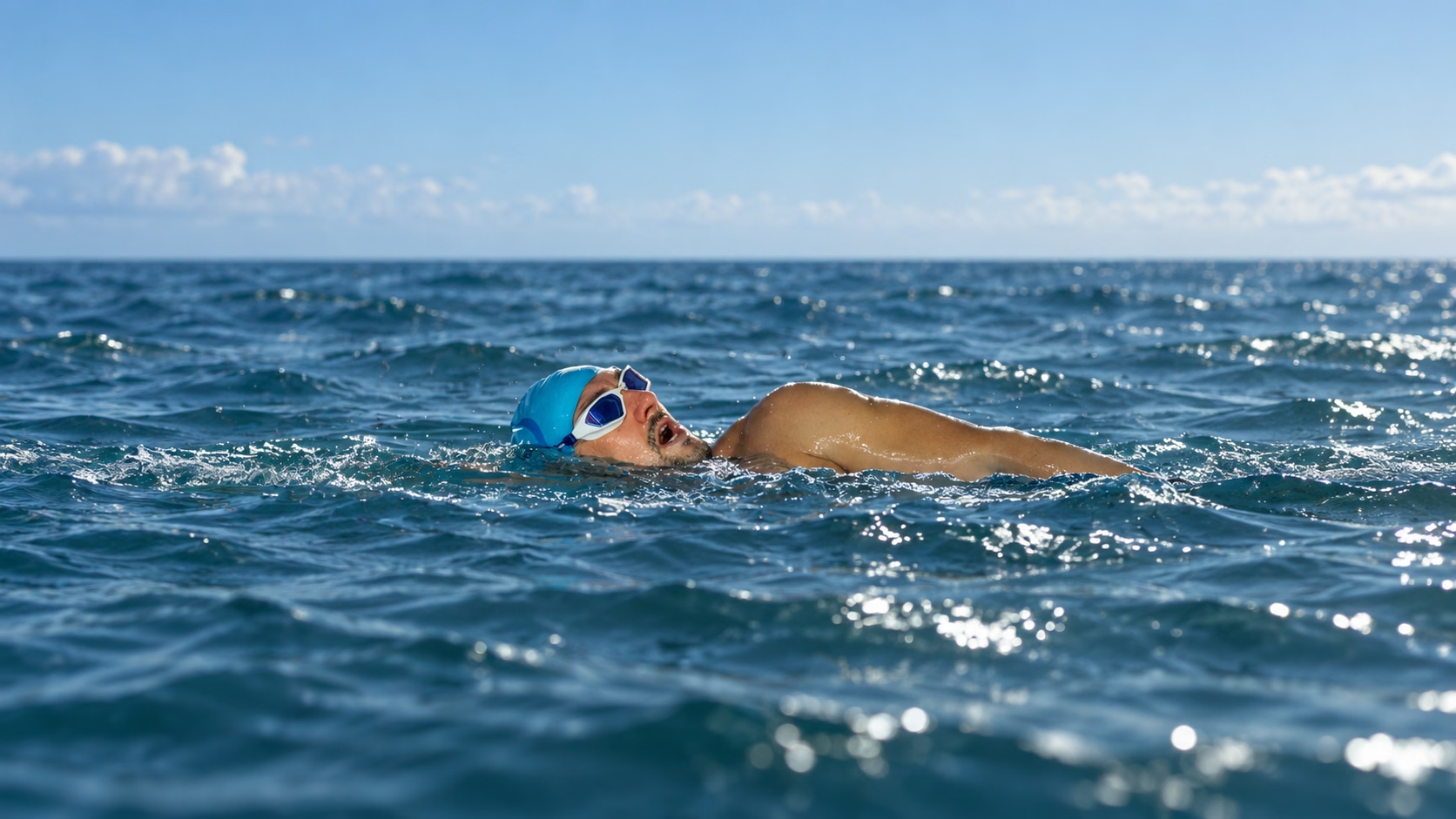
The swim should establish a sustainable swim position without unnecessary physiological cost. Strong swimmers shouldn’t make the first few minutes a threshold effort for minimal gain. Athletes who are less comfortable in crowded water should work on their starts, sighting and drafting.
Coach de Bruin wants an athlete to come out of the water composed, transition through T1 quickly and go straight into the bike plan. Athletes should be ready to race with or without a wetsuit, as the final decision will be made by the race-week ruling of the organiser.
Bike Strategy: The Fastest Split That Protects the Run
Coach de Bruin would not recommend cycling power based on a general FTP percentage. The aim should also include duration, fatigue resistance, heart rate response, RPE, heat and your capacity to run thereafter.
In simulations, Coach de Bruin considers normalised power, variability, time out of position and heart-rate drift. Strong riders frequently lose more on the run than they gain by continually exceeding their ceiling. The ideal bike split is the fastest one that still allows the half marathon to be run as planned.
For a Dubai-based athlete, I assume higher heat tolerance and focus on execution: pre-cooling as needed, aggressive hydration/electrolyte targets, and pacing that keeps power steady without letting HR drift too far.
For an athlete arriving from Europe/cooler climates, I plan a 7–14 day heat acclimation ramp (reduced intensity/volume at first, earlier sessions, more shade/indoor options), push sodium/fluids and cooling strategies harder, and I’m quicker to cap by HR/RPE rather than forcing target power until they adapt.
Ultimately treat heat like altitude.
– Coach de Bruin

Run Strategy: Do Not Race the First Kilometres
The first few kilometres should be enough to settle mechanics, acclimatisation and fuelling needs and the actual cost of the bike ride should become clear. RPE and heart rate might trail behind the pace when jumping straight into T2; thus, an aggressive opening split can be mistaken as a strategic move at first but will cost you later down the road.
Even if the opening section seems surprisingly easy, Coach de Bruin will still make the athlete follow the planned guardrails. Start racing when pace, heart rate, temperature response and form have stabilised, not while transition adrenaline is at its peak. The main objective is to keep your options open for later in the run.
Preparing for Salalah’s Heat
The Khareef season in Salalah ends by October and warming air temperature is noted by IRONMAN. Heat acclimation should dictate how sustainable power, heart rate, RPE, hydration needs and fuelling tolerance are adapted.
While athletes from Dubai could get some good heat exposure, Coach de Bruin is not presumptuous in that they will be fully acclimatised and he will still be testing their response in race-specific sessions. Acclimatisation needs to be more intentional for athletes from cooler regions. Decisions should be based on sweat rate, body-mass change, fluid tolerance and recovery.
In a 70.3 race-sim ride in Dubai conditions (~34–36°C), the athlete held target IF for the first 45–60 minutes, but HR drifted ~12–15 bpm above the usual curve at the same power and RPE jumped from ~6/10 to ~8/10 despite steady watts; cadence also started to “hunt” and power became spiky on small rises.
We adjusted by starting 20–30 minutes earlier, adding a pre-cooling routine + ice/water dousing every 10–15 minutes, increasing sodium (about +300–500 mg/hr) and fluids, and moving carbs earlier (front-loading the first hour) while slightly lowering early-bike pacing (cap HR / keep power smoother) to protect the run.
For a cooler-climate arrival, I’ve seen the same pattern show up even sooner (within 20–30 minutes) at a lower power than expected—so we use a 10–14 day heat ramp, keep the first key sessions HR/RPE-capped, and only re-test race power targets once the HR-vs-power curve normalizes.
– Coach de Bruin
Nutrition Must Work at Race Output
Nutrition should take into account anticipated time, body mass, glucose tolerance, sweat rate, sodium loss and conditions. Coach de Bruin does not use a single uniform intake target. He designs a plan that the athlete can tolerate and execute while still delivering the required race output.
Key rides and training bricks should test nutrition in the racing output at the race intensity. Intake, conditions, a change in body mass and subsequent run quality should all be recorded. Decide on the products, the concentration, where to put the hydration bottles and the timing of when to use them before race week.
The Training Priorities
12-8 Weeks Before the Race
Identify primary limitations: swim energy expenditure, bike power durability, aerodynamic comfort, heat response, nutrition uptake or running well after 90km of cycling. Address your bike fit, equipment and injury concerns before they affect the quality of race-specific training.
8-4 Weeks Before the Race
Long rides should include prolonged effort at race output, in race position and with race nutrition. Brick runs should verify if the bike execution enables you to mimic target run mechanics and intensity.
Last 4 Weeks Before the Race
The important simulation should include planned bike output, location, nutrition, heat and a strategic run. Coach de Bruin assesses power fluctuations, heart-rate variability, RPE, intake and how the run went thereafter, not only if the athlete finished the workout.
Prepare for IRONMAN 70.3 Dhofar With Coach de Bruin
Generic plans can’t take into consideration your schedule, injury history, race statistics, equipment, heat reaction or objective. De Bruin Train is a customised triathlon coaching service by Coach Gerhard de Bruin for athletes in Dubai, the UAE and abroad.
Preparation can include TrainingPeaks programming, race-specific bricks, pacing analysis, nutrition rehearsals, heat adaptation and race-week planning. WhatsApp Coach de Bruin or submit your details to build a realistic performance plan for 24 October.
IRONMAN 70.3 Dhofar FAQs
When is IRONMAN 70.3 Dhofar 2026?
IRONMAN 70.3 Dhofar is scheduled to take place on Saturday, 24 October 2026.
Where does IRONMAN 70.3 Dhofar take place?
The race takes place at Hawana Salalah in Dhofar, Oman. The venue combines a coastal setting with access to Salalah and the surrounding Dhofar landscape.
What are the distances for IRONMAN 70.3 Dhofar?
Athletes complete a 1.9km swim, a 90km bike course and a 21.1km run, covering a total distance of 113km or 70.3 miles.
Can relay teams enter IRONMAN 70.3 Dhofar?
Yes. The event offers both individual and relay entry options, subject to availability through the official registration platform.
How can athletes register for the race?
Athletes can check availability and register through the official IRONMAN registration page .