This guide examines the specific performance demands of the first full-distance IRONMAN South Africa in Mossel Bay, including its sea swim, hilly bike and rolling marathon. It explains how ambitious age-group athletes should approach pacing, durability, fuelling and variable coastal conditions when historical results cannot provide a reliable race forecast.
| Official event name | ISUZU IRONMAN South Africa, Mossel Bay African Championship |
|---|---|
| Date | Sunday, 18 April 2027 |
| Location | Mossel Bay, Western Cape, South Africa |
| Total distance | 226km / 140.6 miles |
| Swim | 3.8km sea swim |
| Bike | 180km, officially described as hilly |
| Run | 42.2km, officially described as rolling |
| Championship status | IRONMAN African Championship |
The ISUZU IRONMAN South Africa, Mossel Bay African Championship, takes place on Sunday, 18 April 2027. It will be the first full-distance edition in Mossel Bay after the championship’s move from Nelson Mandela Bay.
For ambitious age-group athletes, this event is not a race to predict from an old result sheet. The new venue, hilly bike and rolling run demand durability, terrain-specific preparation and decisions that can withstand changing coastal conditions.
The organiser lists a sea swim, hilly bike and rolling run, with typical air temperatures of approximately 12°C to 23°C. Confirm exact routes, elevation, aid stations and cut-offs in the final 2027 athlete guide.
Targeting an African Championship Result?
Coach Gerhard de Bruin can turn your current data, available training time and performance target into a course-specific build.
A New Course Changes the Calculation
Mossel Bay has hosted IRONMAN 70.3 racing, but doubling those splits will not produce a credible full-distance forecast. The cost of climbing, wind and repeated changes in effort grows across 180 km; manageable 70.3 mistakes can decide the final 15 km of an IRONMAN marathon.
Coach de Bruin would therefore model several scenarios rather than anchor the athlete to one finishing time. The useful questions are how power, position, fuelling and run mechanics hold under a favourable day, an expected day and a difficult coastal day.
When you’ve got a first-edition full-distance course (new venue, new route, no prior results), the mistake is pretending you can “predict” exact splits. You can’t. What you can do is build realistic ranges by stacking a few reliable anchors, then widening/narrowing the bands based on uncertainty.
– Coach Gerhard de Bruin
The Sea Swim Is About Access to the Bike
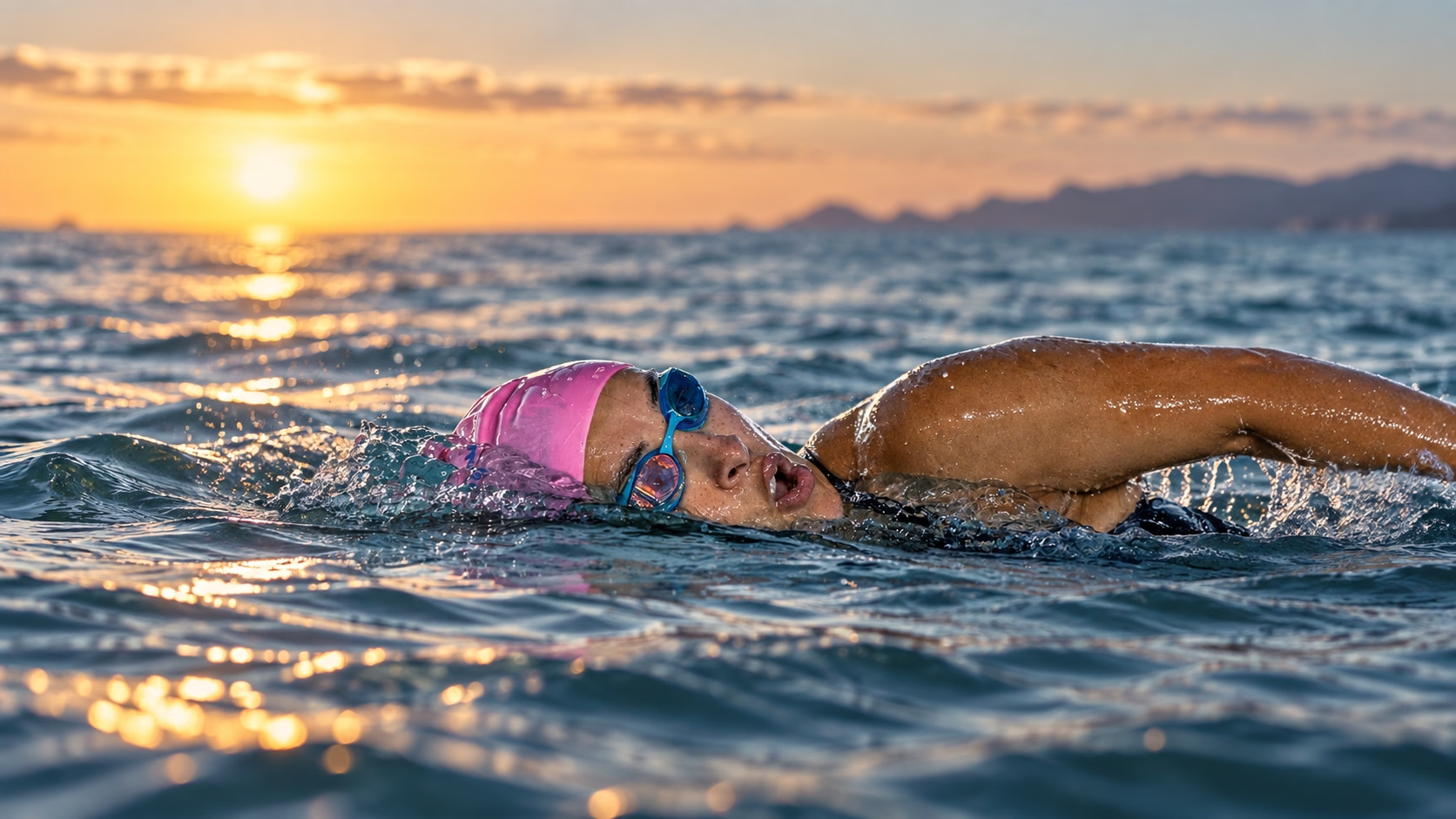
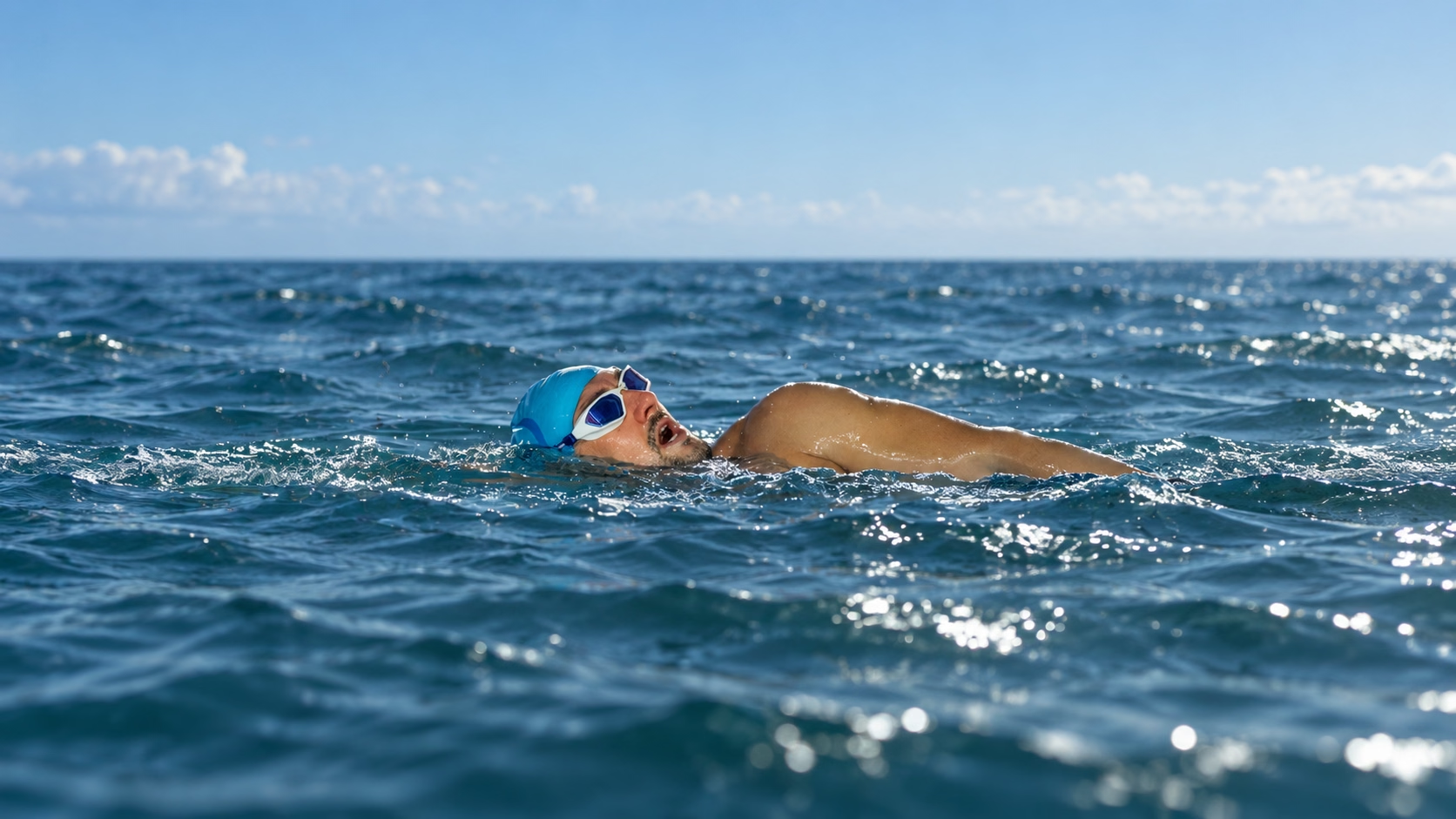
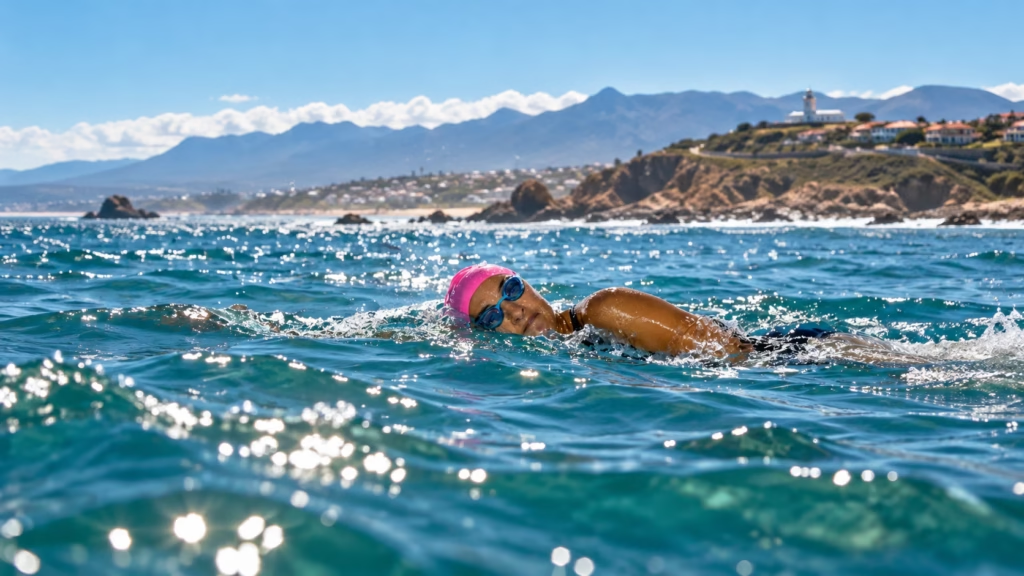
A 3.8 km sea swim can change with swell, current, visibility and congestion. The objective is to establish a useful position without carrying an avoidable physiological cost onto the bike.
Training should include open-water rhythm, sighting under fatigue and controlled changes of speed around starts or buoys. Wetsuit use will depend on the race-day ruling, so prepare for either outcome.
The Bike Must Be Ridden on Terrain, Not Average
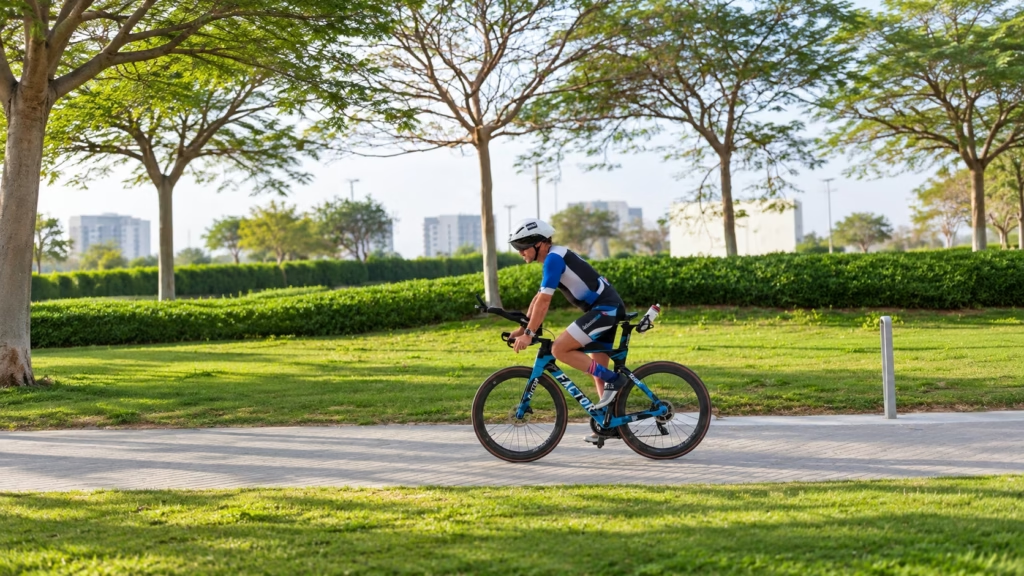
“Hilly” matters because average power hides how the work was produced. Repeated spikes and poor recovery over crests can create a respectable bike split followed by a compromised marathon. Coach de Bruin assesses normalised power, variability, cadence, aerodynamic durability and fuelling under changing terrain.
Rehearsals should reproduce long climbing blocks and the transition to controlled running. Gearing must avoid excessive torque, while the setup must remain stable in exposed wind. The correct target is the highest output the athlete can absorb and still begin the marathon with options.
First data signal: a rising Variability Index (VI) early on the bike (especially in the first 60–90 minutes), i.e., NP drifting high relative to Avg Power because they’re repeatedly spiking power on climbs/rollers.
– Coach Gerhard de Bruin
Plan for More Than One Weather Scenario
Coastal racing can combine a cool start, warming air and shifting wind. Dubai athletes may be heat-adapted yet less familiar with cooler water, gusts or managing clothing across a long day. A mild forecast does not remove hydration risk.
Preparation should test wheel choice, tyre pressure, clothing and pacing in imperfect conditions. A forecast should adjust the plan—not replace it. Final decisions belong after course inspection and the organiser’s race-week updates.
The Marathon Begins Before T2
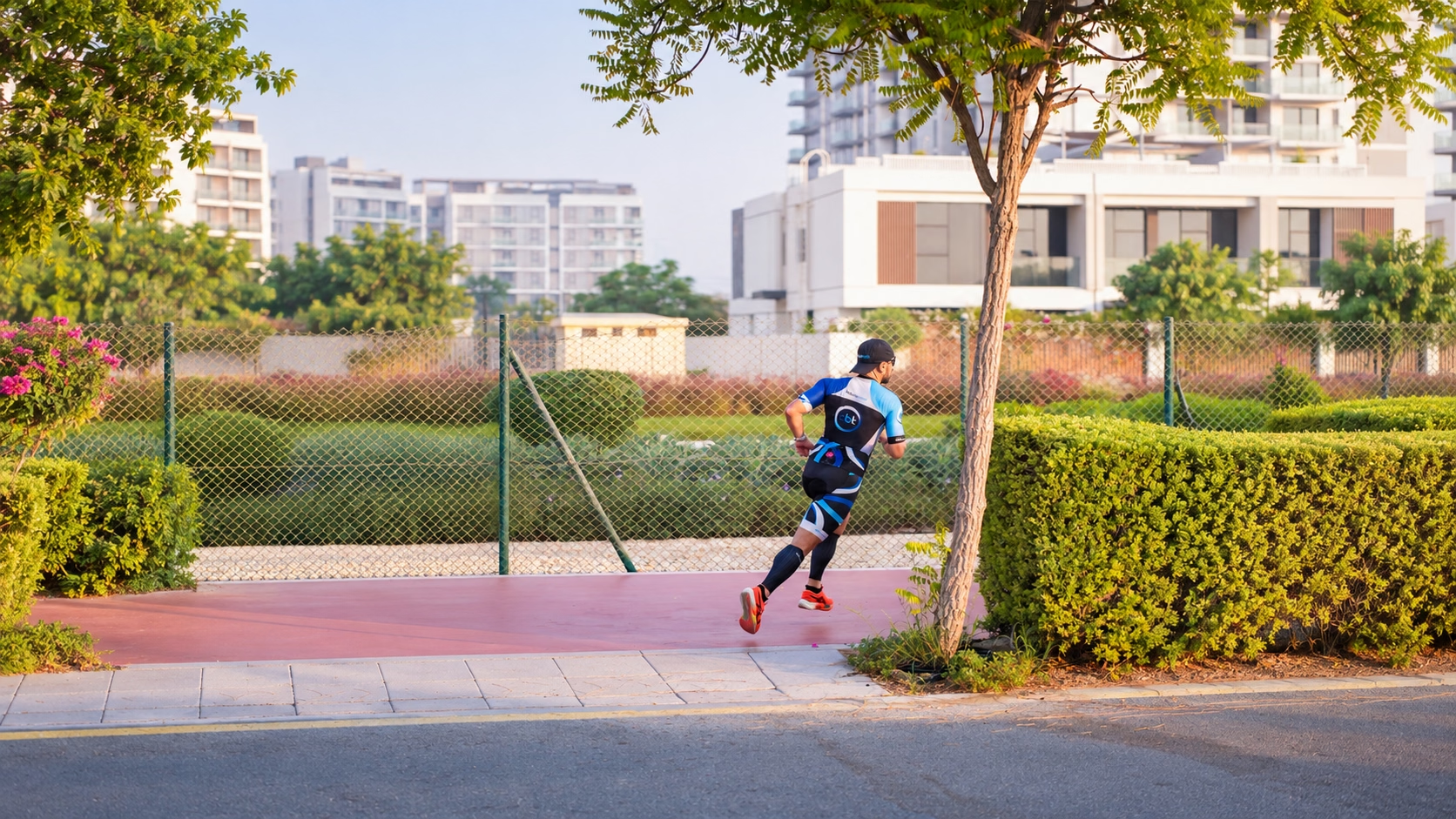
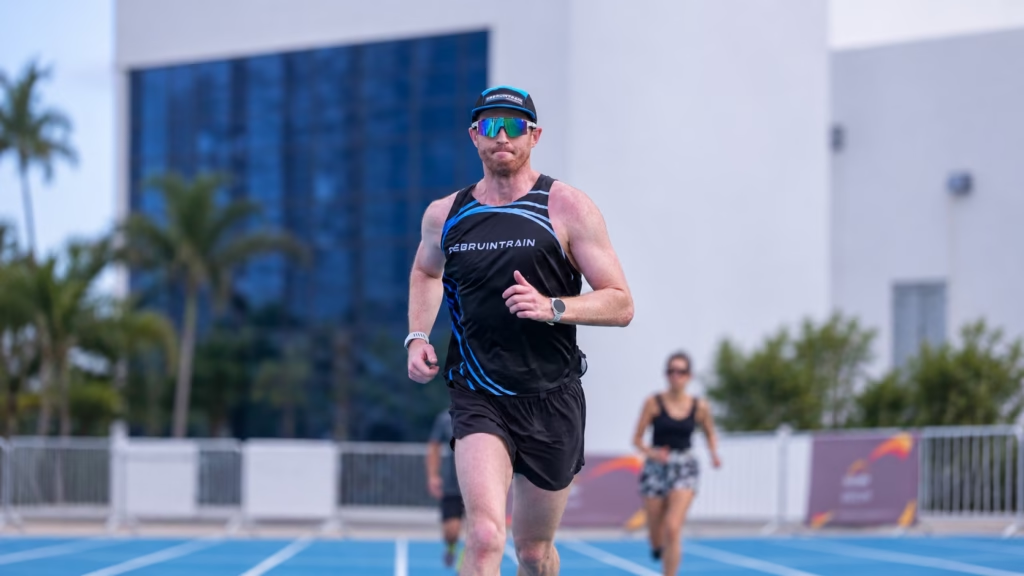
A rolling 42.2 km run exposes accumulated errors. Early pace can feel controlled while heart rate, core temperature, and muscular damage are still catching up. The athlete who chases a fixed pace on every rise may turn a manageable course into a sequence of costly surges.
Coach de Bruin would use pace alongside RPE, heart rate, gradient, and form. Early restraint creates the possibility of racing later; an aggressive opening removes it. Long bricks and rolling runs should reveal whether mechanics remain economical after sustained cycling.
Fuel for the Work You Can Sustain
Full-distance nutrition is a performance system, not a target copied from another athlete; there are male and female differences. Carbohydrate, fluid and sodium requirements depend on sweat rate, duration, intensity, conditions and gastrointestinal tolerance. The plan must also work on hills and in the wind.
Key rides should record intake, conditions, body-mass change, heart-rate drift and subsequent run quality. Settle products, concentration and carrying capacity before taper. An intake that fails under race load is not a race plan.
Build the Athlete Mossel Bay Requires
The early build should prioritise consistency, swim economy, strength, position and the athlete’s main durability limiter. The specific phase then extends controlled race output, adds terrain-matched cycling and tests fuelling within purposeful bricks.
Final simulations should confirm disciplined bike variability, stable position, complete nutrition and durable running form. The taper preserves these qualities while reducing fatigue; it cannot rescue missed training.
Race Week: Remove Uncertainty Early
Arrive early enough to assemble and test the bike, register, inspect transition access and complete short sessions locally. Verify airport transfers and bike-baggage arrangements before booking.
Because this is the first full-distance edition at the venue, historical Mossel Bay 70.3 maps are context—not authority. Use the final athlete guide and official briefing for the 2027 route, rules and schedule.
The UAE athlete’s prep is about de-risking novelty (cool + wind + travel + “RPE lies”), while the local South African athlete’s prep is about sharpening execution (equipment, pacing discipline, and race-specific rehearsal).
– Coach Gerhard de Bruin
Prepare With Coach de Bruin
Coach Gerhard de Bruin provides personalised triathlon coaching through De Bruin Train for athletes in Dubai, across the UAE and worldwide. Preparation can include TrainingPeaks programming, terrain-specific brick sessions, nutrition rehearsals and race-week planning.
For a new full-distance course, generic mileage is not enough. Build a plan around the demands of Mossel Bay and the result you are pursuing.
Frequently Asked Questions About IRONMAN South Africa 2027
When is IRONMAN South Africa, Mossel Bay, 2027?
The race takes place on Sunday, 18 April 2027, in Mossel Bay, Western Cape.
What are the race distances?
Athletes complete a 3.8km sea swim, 180km bike and 42.2km run, covering 226km in total.
Is this the first full-distance IRONMAN in Mossel Bay?
Yes. Mossel Bay has hosted an IRONMAN 70.3, but 2027 marks the African Championship’s first full-distance edition there following its move from Nelson Mandela Bay.
What is the Mossel Bay course profile?
IRONMAN currently describes the bike course as hilly and the run as rolling. Athletes should wait for the final 2027 maps and elevation data before calculating exact pacing or gearing.
Can previous Mossel Bay 70.3 results predict my time?
They provide limited context, but they are not a dependable full-distance predictor. Fatigue, fuelling and terrain interact differently across 180km of cycling and a marathon.
Will the swim be wetsuit legal?
That depends on official water-temperature measurements and competition rules on race day. Athletes should prepare to race confidently with or without a wetsuit.
How long should I train for this IRONMAN?
Many experienced athletes use a focused 16- to 24-week build on top of an established endurance base. The appropriate runway depends on current fitness, injury history, durability and recent race experience.