| Date | Saturday, 30 January 2027 |
|---|---|
| Location | Sir Bani Yas Island, Abu Dhabi, UAE |
| Long distance | 3.8km swim, 180km bike, 42.2km run |
| Middle distance | 1.9km swim, 90km bike, 21.1km run |
| Standard distance | 1.5km swim, 40km bike, 10km run |
| Other events | 200–1,600m swims, 30–90km rides and 2.5–10km runs |
| Published average air temperature | 25°C |
| Published average water temperature | 22°C |
| Published average wind speed | 24kph |
| Long-distance bike elevation | Approximately 1,228m |
| Long-distance run elevation | Approximately 100m |
The official athlete guide will confirm final course distances and race-day details. Because some previously published course information differs from the current Challenge Family listing, athletes should wait for the updated 2027 route and GPX files before finalising their pacing strategy.
Targeting a Podium, PB or Controlled Long-Course Debut?
Coach de Bruin can build the preparation around your performance data, available training time and chosen distance.
The Island Changes the Performance Problem
More than half the island forms part of a wildlife reserve, while athletes and supporters can stay aboard the event’s chartered cruise ship. The small race village makes movement and navigation easier, but access to the island and transporting your bicycle reduces the potential margin to forget one’s equipment. Although the event is super well supported by local shops, you have to take all your gear and race nutrition.
Equipment, nutrition and spares must be ready before departure. Coach de Bruin would treat travel execution as part of the taper, with sleep and meal timing built around the accommodation plan.
Your bike can roll onto the ship without any issues. There is a transition rack on the ship. And all bikes are secured.
– Coach de Bruin
A Calm-Looking Swim Can Still Split the Field
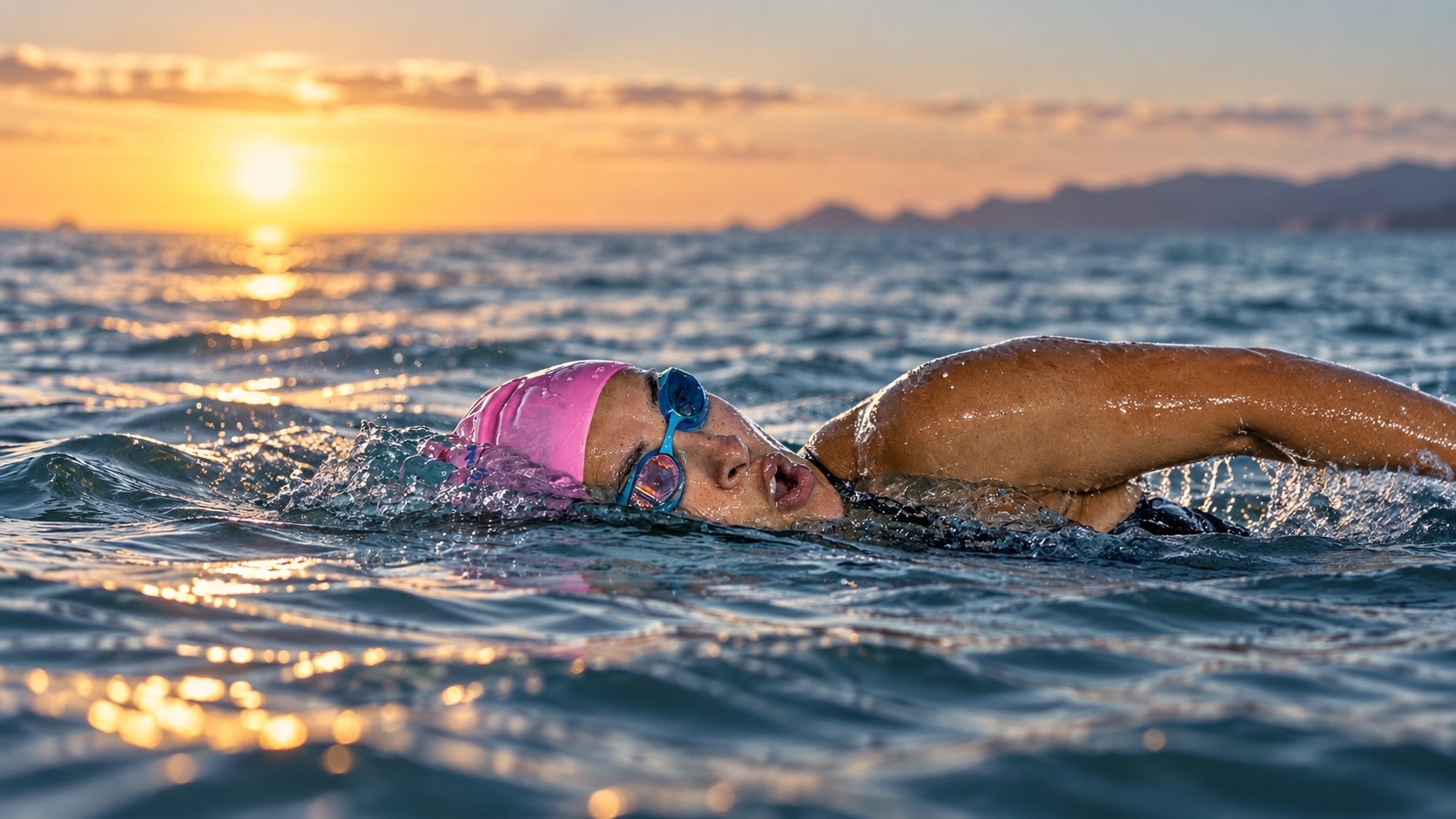
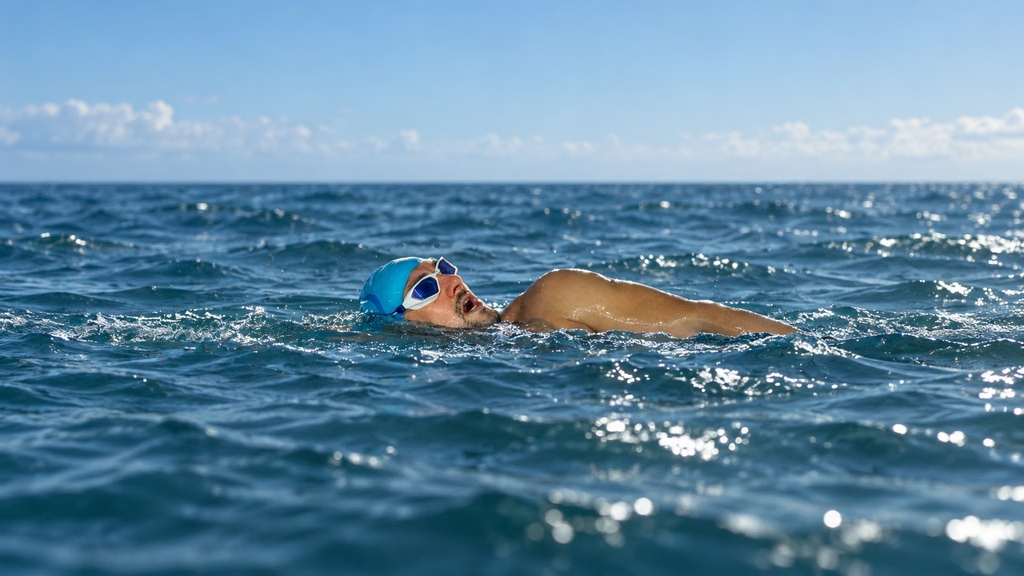
The southeast island swim is protected from significant swell. Published water temperatures range from 18 to 22°C, but the final wetsuit rules depend on the official decision of the organisers.
Competitive athletes still need to establish suitable feet early, sight efficiently and leave the water in a way that supports the bike in T1. Both wetsuit and non-wetsuit execution should be rehearsed and trained for.
The Bike Rewards Range, Not One Perfect Number
The island ring road offers smooth, fast sections, but the connecting roads climb to approximately 100 m above sea level. Challenge Family lists about 1,228 m of elevation for the long-distance bike and an average wind speed of 24kph. This is neither a flat time trial nor a climbing course; it requires athletes to change output in a timely fashion without losing control and power.
Coach de Bruin would define power ceilings for climbs and headwinds, aerodynamic priorities for sections where you become exposed, and clear rules for recovering speed after an increased climb. Normalised power, variability, cadence, and time in position matter more than chasing one average. The correct ride distributes effort efficiently according to terrain while protecting the final run and remaining within a sustainable output.
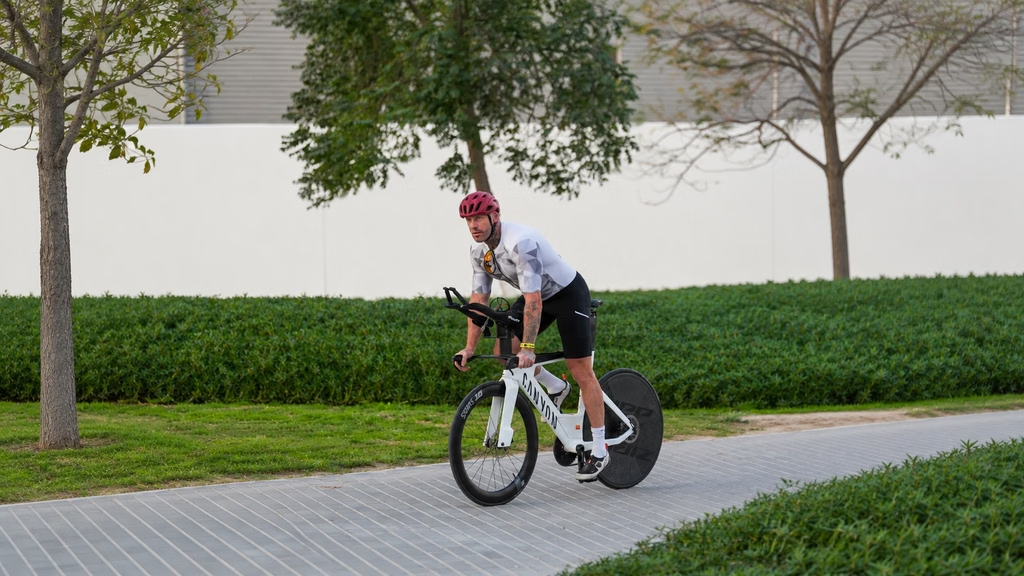
Riding in the wind always favours the stronger bikers; that’s their time to shine and hurt the legs of the runners. But you can minimise the loss on the bike by keeping your Variable index in check and sticking to your nutrition plan. Riding hills or riding into the wind have similar trademarks apart from the power-to-weight factor.
Drinking in the windy conditions can be tricky, but you have to focus on getting down the drink so you don’t fall behind, as the wind normally does not make you conscious of the amount of the sweat loss you are experiencing. So make sure you keep the numbers controlled and within your limitations.
– Coach de Bruin
Wind Should Change Decisions, Not Ambition
Wind affects speed, handling, cooling and nutritional access even when power remains stable. Athletes should practise holding their position in crosswinds and drinking without unnecessary deceleration or loss of stability and position. A deeper wheel is only faster if it can be controlled confidently and strategically.
Race rehearsals should include variable-power intervals in various exposed conditions. The relevant measure is whether the athlete can execute the complete bike-to-run plan in T2—not simply tolerate gusts with adequate recovery.
The Run Looks Fast After a Costly Bike
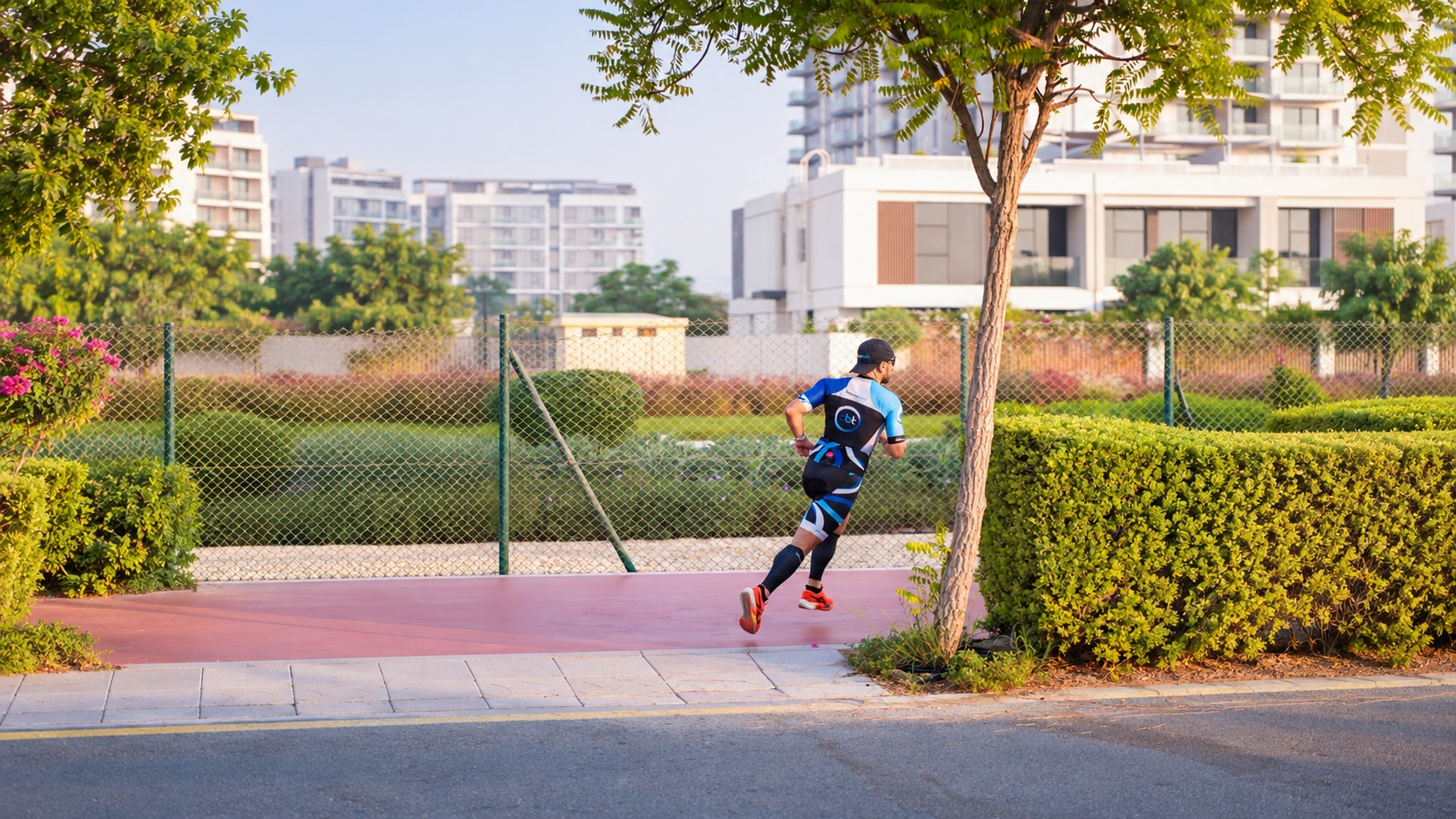
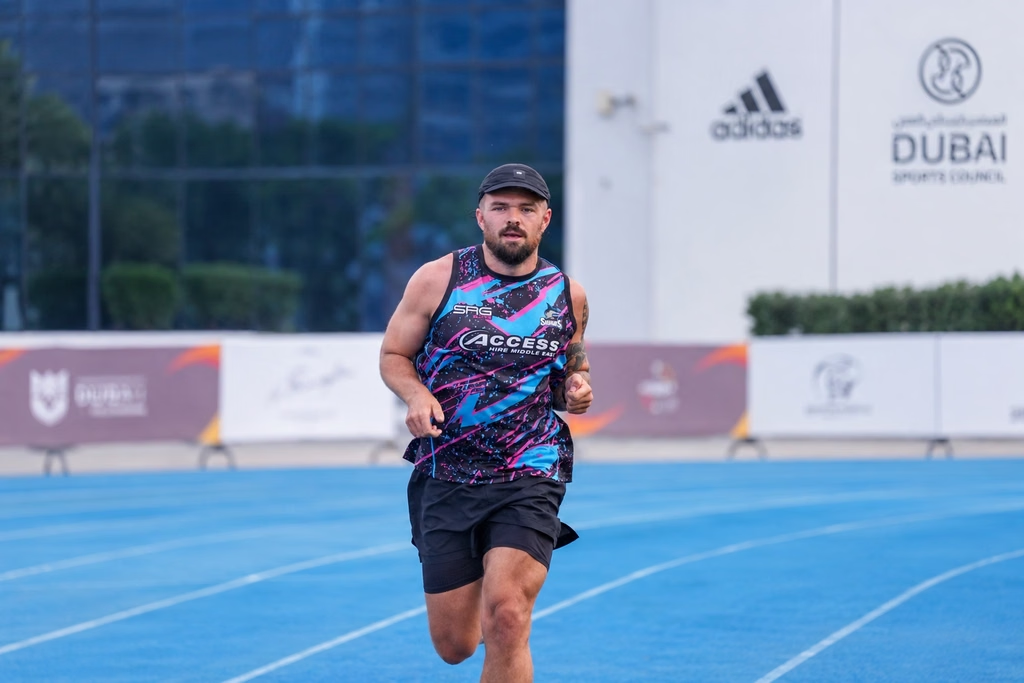
The relatively flat coastal run passes repeatedly through the race village and offers frequent aid-station access, so it is wise to use them strategically. The atmosphere can help late in the race, but it can also encourage an unsustainable opening pace that may be regrettable towards the end of the run.
For middle-distance athletes, the half-marathon should begin below the intensity that transition adrenaline suggests later on in the run. Long-distance athletes need even greater restraint to maintain a sustainable pace throughout the run: the first half of the marathon should preserve form, cooling and fuelling capacity for the point at which the accumulated bike cost starts becoming visible as fatigue starts to slowly set in.
Wind Should Change Decisions, Not Ambition
Wind affects speed, handling, cooling and nutritional access even when power remains stable. Athletes should practise holding their position in crosswinds and drinking without unnecessary deceleration or loss of stability and position. A deeper wheel is only faster if it can be controlled confidently and strategically.
Race rehearsals should include variable-power intervals in various exposed conditions. The relevant measure is whether the athlete can execute the complete bike-to-run plan in T2—not simply tolerate gusts with adequate recovery.
The Run Looks Fast After a Costly Bike
The relatively flat coastal run passes repeatedly through the race village and offers frequent aid-station access, so it is wise to use them strategically. The atmosphere can help late in the race, but it can also encourage an unsustainable opening pace that may be regrettable towards the end of the run.
For middle-distance athletes, the half-marathon should begin below the intensity that transition adrenaline suggests later on in the run. Long-distance athletes need even greater restraint to maintain a sustainable pace throughout the run: the first half of the marathon should preserve form, cooling and fuelling capacity for the point at which the accumulated bike cost starts becoming visible as fatigue starts to slowly set in.
Prepare for Challenge Sir Bani Yas With Coach de Bruin
Coach Gerhard de Bruin provides personalised triathlon coaching through De Bruin Train for serious athletes in Dubai, across the UAE and worldwide. Preparation can connect physiological testing and TrainingPeaks data with the demands of your chosen Sir Bani Yas race.
Coaching may include terrain-specific bike prescription, open-water development, nutrition testing, long-course durability, equipment decisions and taper management.
Sir Bani Yas 2027 FAQs
When is Challenge Sir Bani Yas 2027?
Challenge Family lists Saturday, 30 January 2027, as the main event date on Sir Bani Yas Island in Abu Dhabi.
Which triathlon distances are available?
Athletes can currently choose the long distance (3.8km swim, 180km bike and 42.2km run), middle distance (1.9km swim, 90km bike and 21.1km run) or standard distance (1.5km swim, 40km bike and 10km run). Standalone swim, bike and run events are also listed.
Is the bike course flat?
No. It includes fast sections on the island ring road and climbing on connecting roads. Challenge Family publishes approximately 1,228m of elevation for the long-distance bike course.
Is Challenge Sir Bani Yas suitable for a PB attempt?
It may produce fast racing, but wind, climbing and pacing execution will influence the result. Athletes should model their performance training and brick sessions on the confirmed route and their individual data rather than assuming the island course is uniformly fast.
Will wetsuits be allowed?
Challenge Family lists water temperatures of approximately 18–22°C, but wetsuit legality depends on the official race-day measurement and applicable rules. Athletes should prepare for either outcome.
How should athletes prepare for the wind?
Train outdoors in exposed conditions, practise stable handling and rehearse fuelling while maintaining an aerodynamic position. Wheel selection should reflect control as well as theoretical speed.
Where do athletes stay for Challenge Sir Bani Yas?
The event offers a chartered cruise ship as a floating race hotel, with mainland hotels also available as alternatives. Athletes should confirm their transport and accommodation packages directly with the event organisers.