Experience Oman IRONMAN: Oman takes place in Muscat on Saturday, 5 December 2026. It will be the first full-distance IRONMAN held in the Middle East, covering a 3.8 km sea swim, 180 km rolling bike and 42.2 km flat run.
For professional athletes and serious contenders, Muscat will demand disciplined and sustained energy distribution, durable aerodynamic positioning and appropriate nutritional intake that remains effective deep into a warm, coastal race.
| Official event | Experience Oman IRONMAN Oman |
|---|---|
| Date | Saturday, 5 December 2026 |
| Location | Muscat, Oman |
| Total distance | 226km / 140.6 miles |
| Swim | 3.8km sea swim at Qurum Beach |
| Bike | 180km rolling course through and around Muscat |
| Run | 42.2km flat course near Al Qurum National Park and Qurum Beach |
| Status | Inaugural full-distance IRONMAN in the Middle East |
| Registration | Currently open |
| Official event page | IRONMAN Oman |
The final athlete guide remains the authority for timings, elevation, aid stations, cut-offs and rules. As this race is the inaugural edition, athletes cannot model their performance on previous and historical results.
Preparing to Race the First IRONMAN Oman With a Performance Target?
Coach de Bruin can build your programme around your current data, durability, training availability and intended result.
Why Muscat Requires a Different Race Model
Muscat features a warm sea swim, a rolling coastal bike course, and a flat marathon through the urbanised areas of the city. Across 226 km, miscalculated small mistakes will compound: poor sighting increases the cost of your swim, overpowered bike surges consume your energy later on and cause an early-onset fatigue, and an overambitious opening to the marathon exposes any previous overexerted mistakes made in the T1 and the jump into T2.
Bike output, sustainable aerodynamic choices, nutrition intake and temperature acclimation must support form when fatigue is at its highest.
Doing a full ironman is not as easy as just doubling the distance or the training. Ironman exposes another level of fatigue and weaknesses. You swim to bike and bike to run, and having the nutrition dialled in will be the fourth discipline of the day.
To prepare for a full Ironman, it is best to work with an experienced coach. It’s too much of a long, expensive commitment to screw up your day. Focus on your weakness and prepare yourself to hold form under fatigue.
– Coach de Bruin
The First-Edition Problem
IRONMAN Oman has no previous full-distance splits or race footage available. Even with published maps, the interaction between the wind, the surface of the road, the rising temperature throughout the day, and fatigue that can begin to set in later on in the race is less predictable.
Preparation therefore requires rule-setting regarding decision-making that will impact the best outcome for the race, not one rigid plan that won’t stick. Athletes need predefined responses to slice through coastal wind and prevent early heart-rate elevation or slower-than-modelled speed.
Qurum Beach Swim: Control the Cost of 3.8km
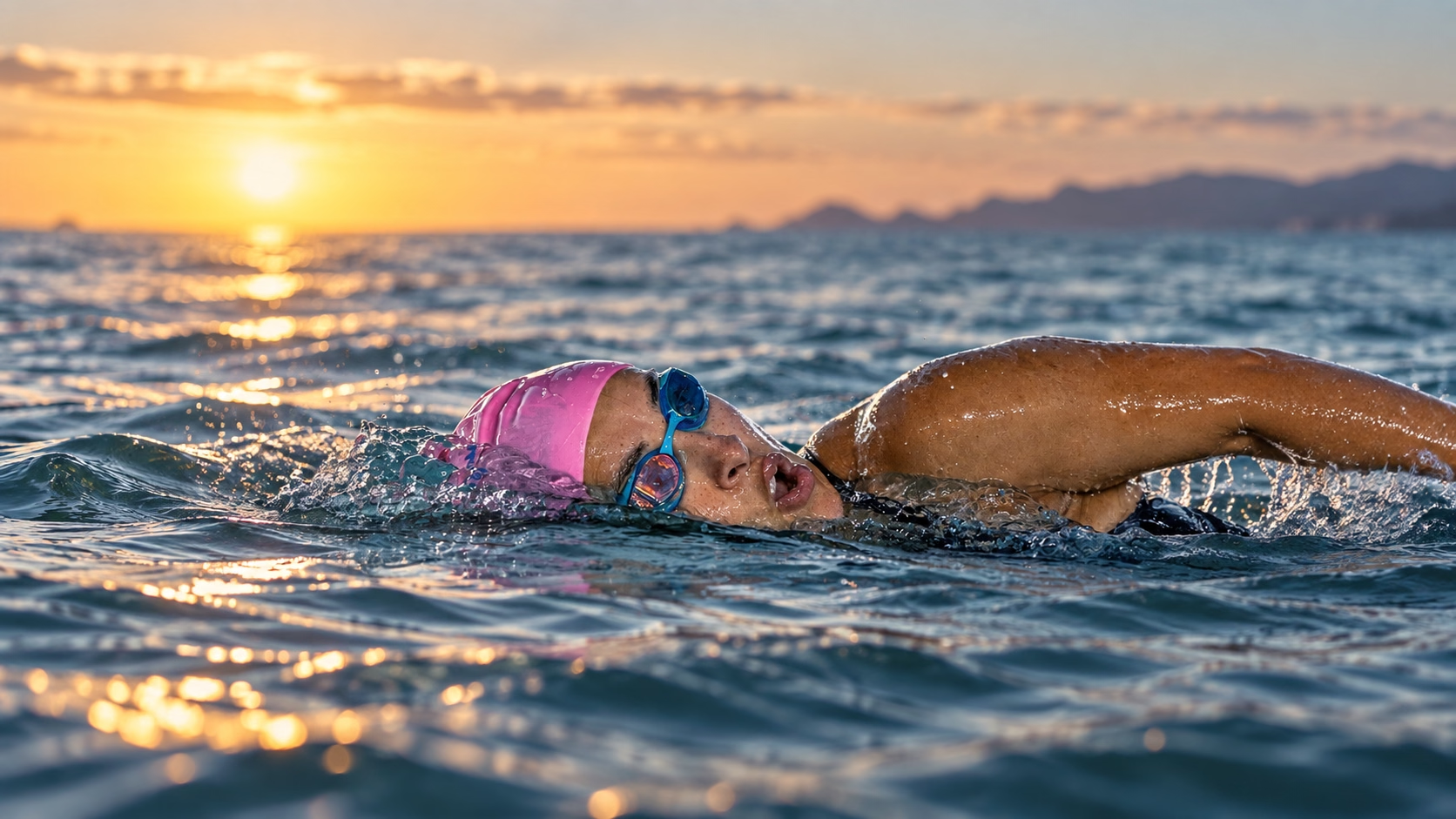
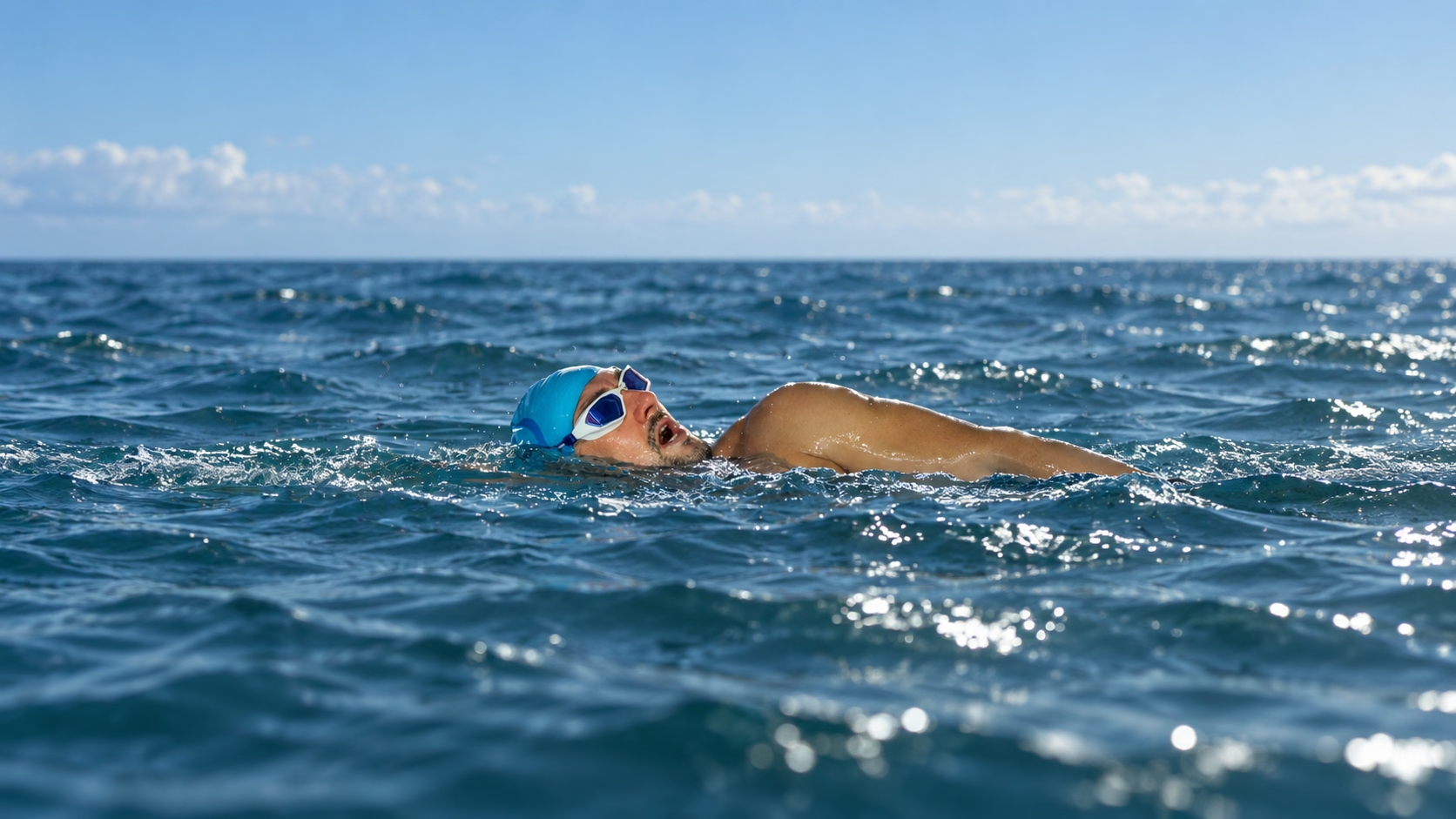
The 3.8 km Qurum Beach swim must establish a good and sustainable position without creating fatigue that affects the first hour of the bike portion of the race. Athletes should prepare to swim in saltwater, dealing with close contact, develop good sighting and be able to adapt to variable environmental conditions.
Coach de Bruin assesses the integrity of your stroke, navigation, breath control and post-swim heart-rate response—not the pace you can maintain in the pool alone. Open-water rehearsals should transition directly into controlled cycling that you can sustain until the jump in the T2 run.

The 180km Bike: Manage the Rolling Cost
The rolling 180 km course passes landmarks including the Royal Opera House, Muttrah and Al Bustan Palace. Changing gradients and exposure to the coastal atmosphere can produce unnecessary variability in power output and muscular fatigue.
Coach de Bruin evaluates the normalised power output that can be sustained, its variability, aerodynamic durability, heart-rate drift, and fuelling compliance. The correct output during the race is the one that preserves the planned marathon that you trained for.

It’s been a debate for years about the perfect cadence and getting the right target for your specific style of riding. Riding an undulating course will force you to go over your target numbers without stressing the anaerobic system too much and burn matches.
Keeping power constant while monitoring heart rate to gauge sweat loss will help you feel as fresh and confident on the bike as possible in an Ironman distance race. An acceptable power-variability on a rolling course (if executed well): VI 1.05–1.08
– Coach de Bruin
The Flat Marathon Is the Final Test
The flat marathon near Al Qurum National Park can support efficient consistency but can bring up a few disruptions that may slow an athlete down who starts too aggressively.
Early restraint and control, stable mechanics and consistent and compatible fuelling should be the top priority. Pace increases only when heart rate, RPE, temperature acclimation and form remain controlled.

Preparing for Heat Across a Full Race Day
December is more favourable than the peak of the summer months, but IRONMAN warns Muscat as a high-air-temperature event. Managing environmental conditions earlier on may become more challenging as the day goes along due to the increasing heat exposure.
Coach de Bruin assesses sweat response, fluid tolerance, heart-rate drift and sustained fuelling in long warm-weather sessions. Everyday UAE heat exposure does not prove full-distance readiness.
Treat heat training in small, targeted doses, then absorb it. Getting exposure has many benefits but should be treated like altitude. You can easily end up fatigued, and it may take as long as 10 days to recover.
Hydrating and understanding your sweat loss in this heat training will help you understand better how to prepare for your next sweaty race in Kona, Malaysia, Taiwan or the odd European Ironman with a heatwave.
– Coach de Bruin
Nutrition Must Remain Executable for 226 km
Full-distance nutrition is a continuous intake system that needs to be planned for appropriately, not merely a carbohydrate target that needs to be set and met. Fuel intake must remain tolerable without causing gastrointestinal discomfort through an aerodynamically maintained 180 km ride and subsequent 42.2 km marathon.
Race-specific sessions should test timing, concentration, fluid and sodium retention, product accessibility through proper placement and gastrointestinal response. A fuel plan that fails late in the bike is not an IRONMAN nutrition plan that will end with a successful outcome.
Coach de Bruin’s Muscat Preparation Phases
Build Durability
Build the aerobic and musculoskeletal durability to absorb full-distance training. Resolve any bike fit issues, recurring injuries, and swimming and nutrition challenges before reaching peak volume.
Rehearse the Muscat Demands
Combine rolling terrain, aerodynamic work, controlled variability and a full nutrition plan put into practice. Long bricks must test sustainable running control after a long, disciplined bike—not reward a fast ride followed by a survival run.
Prove the Race Model
The decisive simulation tests output position, environmental response and temperature acclimation, fuelling intake and run quality. It must leave time for analysis, adjustment and recovery.
In 2017 one of my female athletes attended her first Kona. The day was pretty normal for the big island, and as expected, windy and hot during the bike ride. My pre-race plan was simple. 90 km warm-up, focusing on low rpm fuelling and hydration.
Once the descent was over after the Hawi turn (she was slow on descents), hydrate and fuel the section between the gas station and Queen K, then start building up the momentum. Keep only an eye on heart rate for dehydration signals and time fuelling, as those who overbiked in the heat would pay the price. Hence being told to get the 11th of the bike, she started the run.
Using the freshness of the controlled bike leg to slowly pick the athletes one by one. Entering the Energy Station in 9th place, she overtook 7 girls before approaching the Ali Drive finish.
Moral of the story: be confident in your training and stick to your plan. A race like an Ironman is a close energy equation, and you need to plan the details with your coach.
– Coach de Bruin
Muscat Race-Readiness Evidence
Before tapering, a performance-focused athlete should be able to demonstrate:
- A controlled and strong open-water swim followed by a swift transition to cycling.
- Sustained power and positioning across a long rolling ride.
- A tested response that remains stable through changing winds, heat acclimation and unexpected heart-rate elevation.
- Consistent and well-timed nutrition uptake throughout the bike rather than only in its opening hours.
- Repeatable running strategies after a full-distance bike ride.
- Clear, decisive rules for adjusting and adapting power, pace, cooling or intake.
Unresolved uncertainty should direct final preparation, not be covered with fatigue-producing volume.
Prepare for IRONMAN Oman With Coach de Bruin
An inaugural full-distance race requires more than a basic programme and a predetermined finish time. Coach Gerhard de Bruin offers personalised coaching in Dubai, throughout the UAE and worldwide.
Build Your IRONMAN Oman Race Plan
For Muscat, the coaching process can connect long-course durability, bike restraint, late-race nutrition and marathon decision-making within one evidence-based plan.
IRONMAN Oman 2026 FAQs
Is the Muscat race on 5 December 2026 an IRONMAN 70.3?
No. It is the inaugural full-distance IRONMAN Oman: a 3.8km swim, 180km bike and 42.2km run. IRONMAN 70.3 Muscat is a separate event altogether.
What is the IRONMAN Oman 2026 course profile?
IRONMAN describes a Qurum Beach sea swim, a rolling Muscat bike course and a flat marathon near Al Qurum National Park and Qurum Beach. Finalised details remain subject to the official athlete guide.
Will IRONMAN Oman be hot?
IRONMAN describes the event as having a high air temperature. Athletes should test how prolonged heat exposure affects sustainable output, hydration, fuelling tolerance and late-race running.
How long should professional athletes prepare for IRONMAN Oman?
Preparation depends on existing full-distance durability, the competition calendar and current condition. Stepping up from 70.3 racing usually requires more than a short build and should be integrated carefully into the athlete’s wider training calendar.
What makes the first IRONMAN Oman difficult to model?
There are no previous full-distance results from this event. Athletes need adaptable power output, sustainable pacing, a compatible nutrition plan and an appropriate environmental adaptation strategy.
Can Coach de Bruin prepare an athlete for a full-distance IRONMAN?
Yes. Coaching can cover TrainingPeaks programming, long-course durability, pacing, nutrition, heat adaptation and race execution based on the athlete’s individual data and goals.