Experience Oman IRONMAN 70.3 Muscat takes place on Saturday, 6 February 2027, with athletes racing from Qurum Beach through the capital. As the Middle East Championship, it is positioned as more than an early-season fitness test.
Muscat rewards athletes who can combine controlled open-water speed, disciplined climbing and an aggressive but sustainable half-marathon. The course offers opportunities to gain time, but very few of them are free.
| Official event | Experience Oman IRONMAN 70.3 Muscat Middle East Championship |
|---|---|
| Date | Saturday, 6 February 2027 |
| Location | Qurum Beach, Muscat, Oman |
| Total distance | 113km / 70.3 miles |
| Swim | 1.9km swim in the Gulf of Oman |
| Bike | 90km rolling course |
| Run | 21.1km flat course |
| Published course format | One-loop swim, one-loop bike and three-loop run |
| Registration | Open at the time of writing |
The final 2027 athlete guide will confirm the route, elevation, aid stations, cut-offs and race-week schedule. Currently available course maps provide a useful reference, but they are marked as subject to alteration.
Racing Muscat With a Podium, PB or Championship Target?
Coach de Bruin can build the programme around your current data, available training time and required race output.
Muscat Is Won Through Cost Control
The historic route links Qurum with coastal and city landmarks before returning to Al Qurum National Park. Its central problem is producing speed across changing terrain without allowing the bike to determine the run.
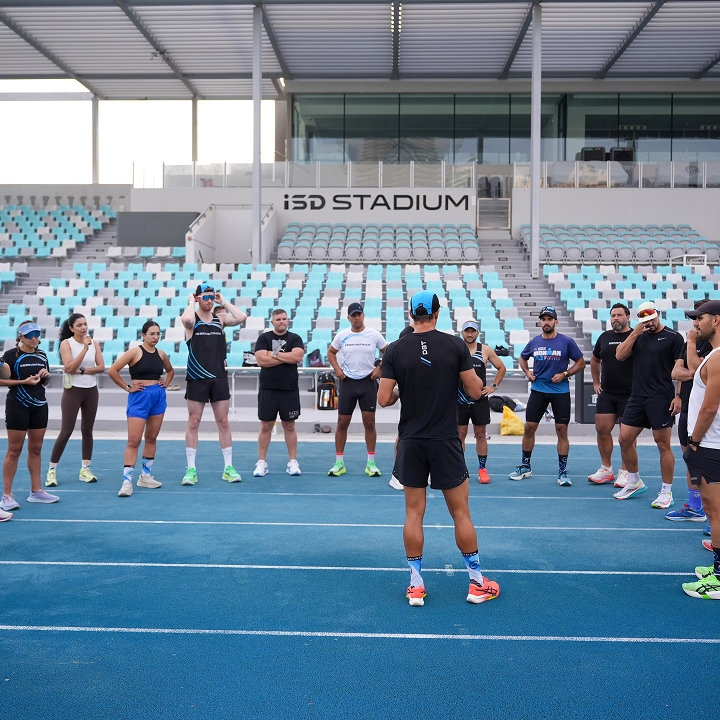
Coach de Bruin would begin with the athlete’s likely race duration and fatigue resistance, then set limits for the sections where ambition is most likely to override judgement. Muscat should feel purposeful from the start but never improvised.
Most athletes start too aggressively on the bike and underfuel during that first hour. Having a pace and structure in place can save your running legs and shave off minutes of your PB.
– Coach de Bruin
Use the Swim to Establish the Race
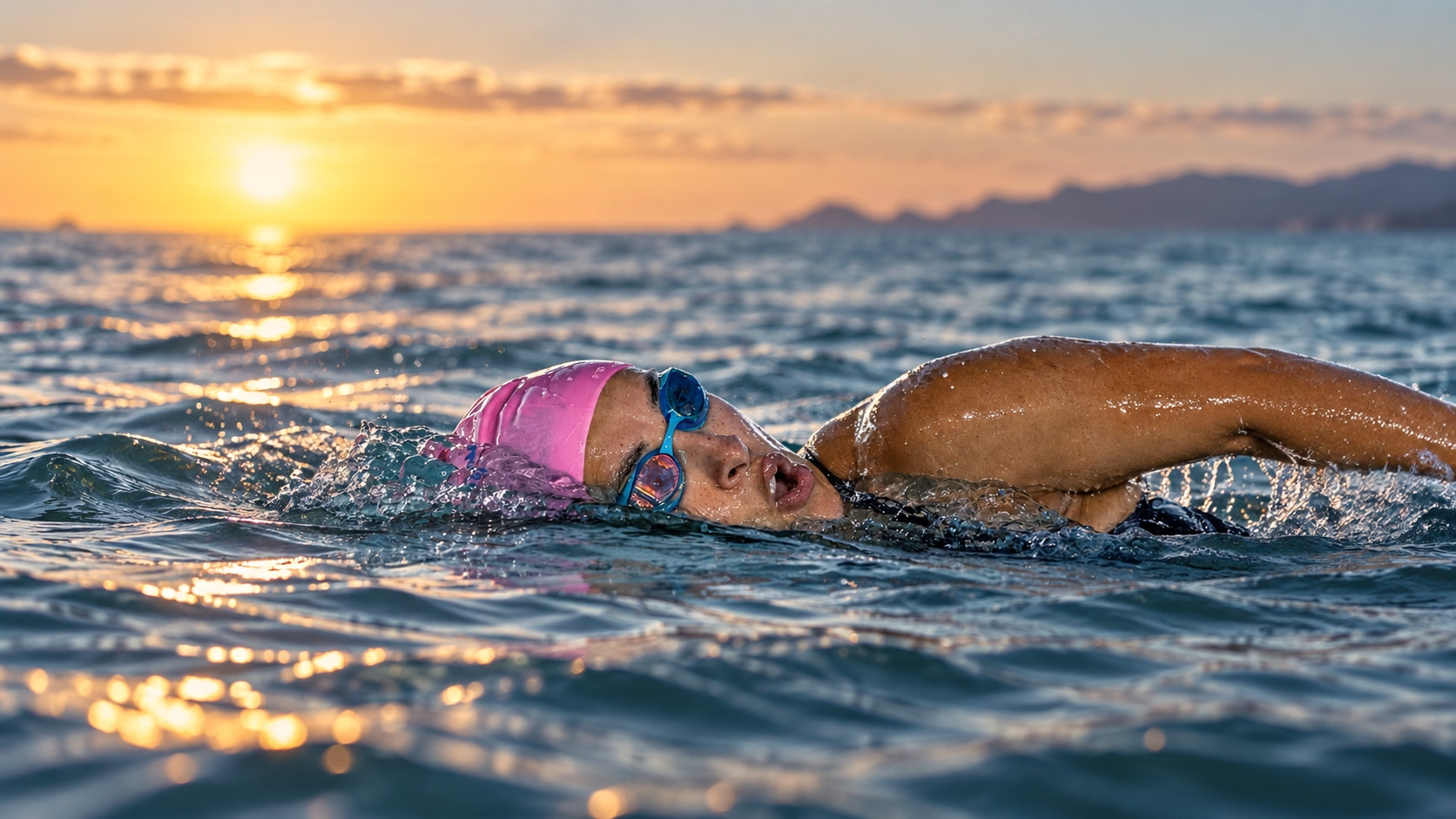
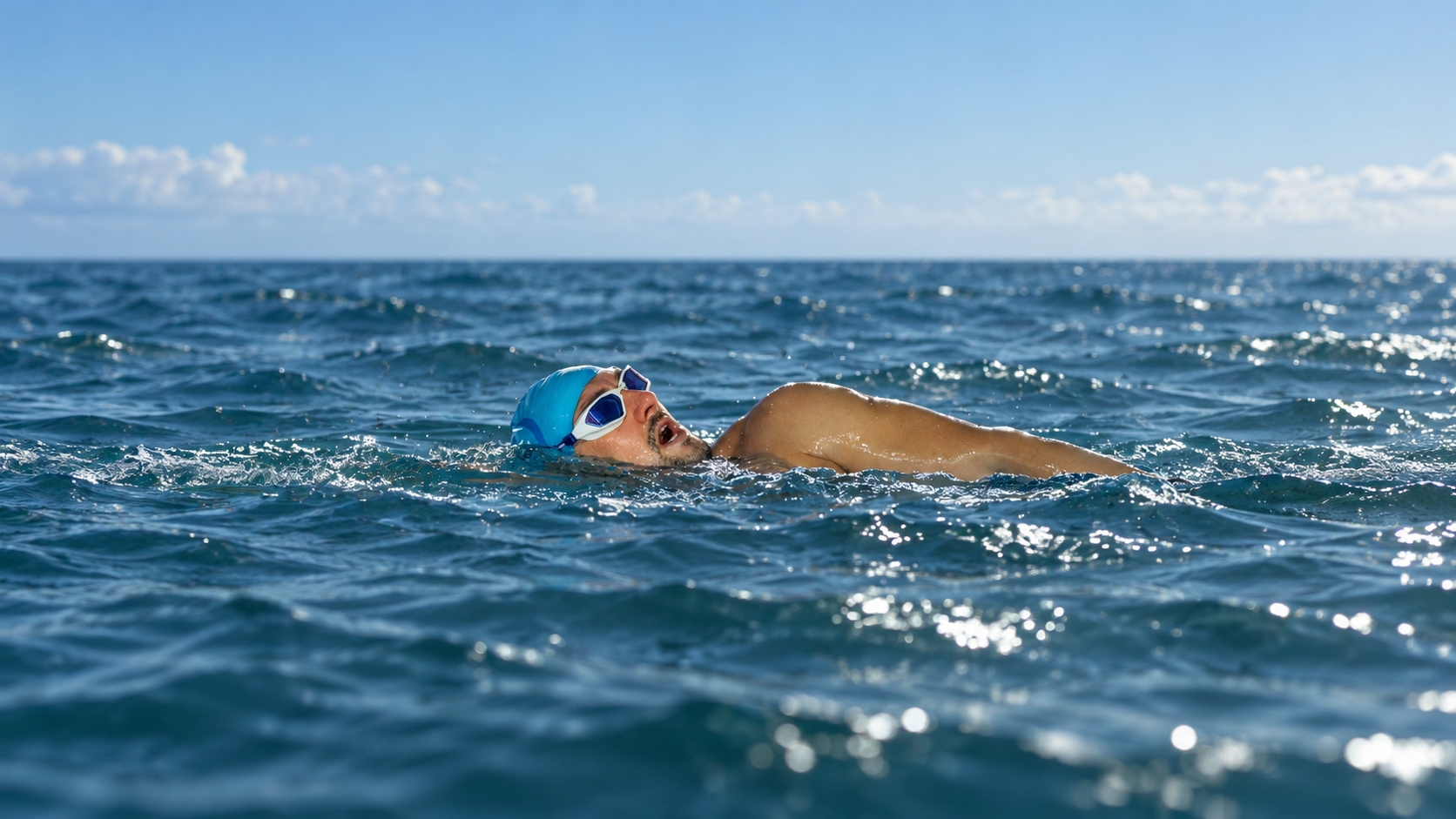
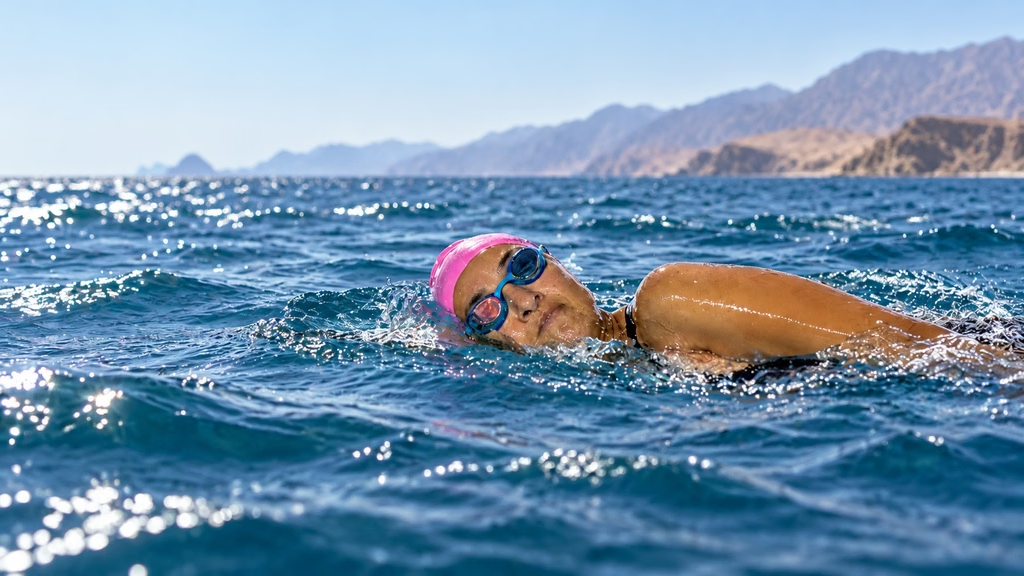
The published route shows one 1.9km loop off Qurum Beach. Current, glare and contact can still matter in calm-looking water. Competitive athletes should start decisively, secure an appropriate group and then reduce unnecessary movement.
The objective is to reach T1 composed and ready to execute the bike plan. Wetsuit status remains a race-week decision based on the official temperature ruling.
The Bike Is Where Muscat Becomes Selective
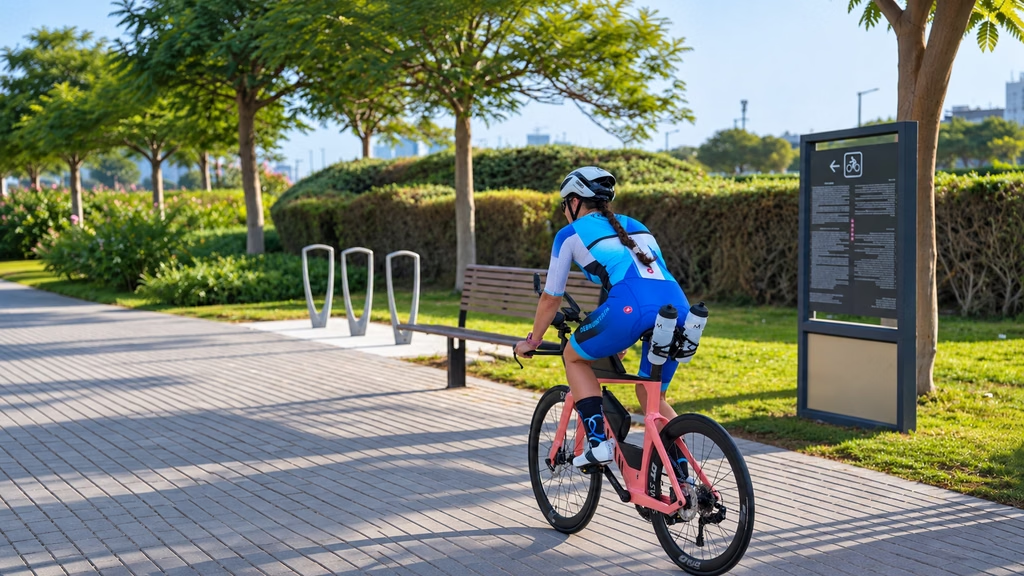
Previous official maps show one 90km loop with considerably more climbing than a typical flat Gulf course. Its inland and elevated sections create repeated decisions about power, cadence and position.
Coach de Bruin would combine an overall target with climbing ceilings, recovery rules and a variability limit. Repeatedly overproducing power on the rises can create a cost that appears during the run.
The hills in Muscat are not for the faint-hearted. Training in a very flat environment then racing in Muscat will leave you suffering during the running leg. With one major hill, you should make sure you have the right gear ratio. Staying within yourself and not spiking your power will save the running legs.
– Coach de Bruin
Descending and Position Are Performance Skills
Time can be lost through poor cornering, excessive braking, unsuitable gearing or an inability to return smoothly to race output after a descent. These are trainable skills.
Race-specific rides should include changes in gradient, controlled surges and immediate returns to an aerodynamic position. Equipment choices should support confident handling. A theoretically faster wheel or setup has little value if it causes tension, lost position or conservative descending.
The Three-Lap Run Creates Accountability
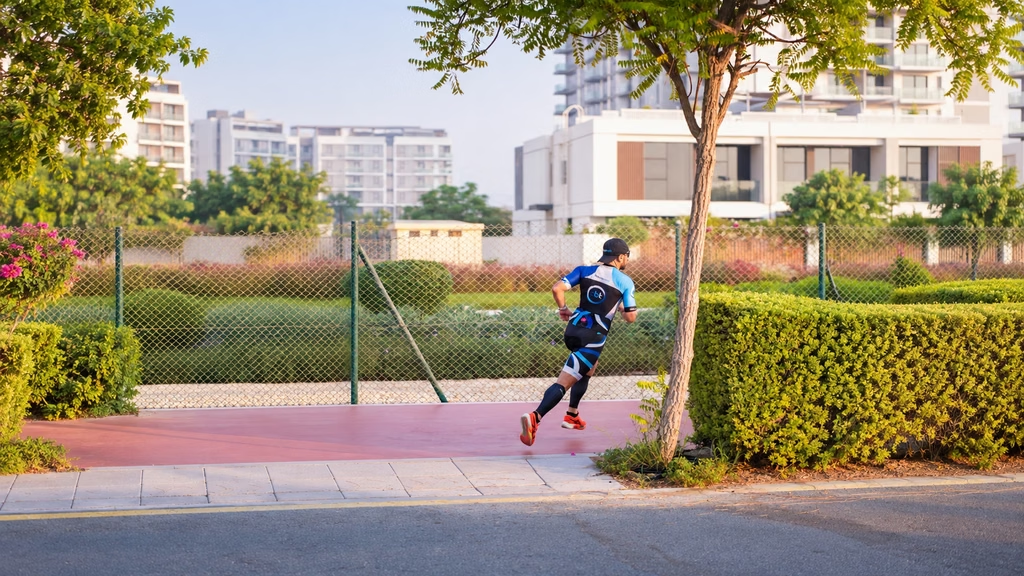
The published three-lap run provides frequent pace references, repeated aid-station access and clear information about position. It also makes reacting too early to other athletes tempting.
Lap one should establish mechanics, cooling and a credible rhythm. Lap two reveals whether the bike execution was correct. Only on the final lap should a well-prepared athlete begin using the remaining margin rather than defending against an opening pace that was never sustainable.
February Conditions Still Need Testing
Direct sun, coastal wind and rising temperatures can still alter heart rate and fluid demand. Conditions should inform pacing without replacing the plan.
UAE- and Oman-based athletes may already have useful exposure, but acclimatisation should not be assumed. Key bricks should track power or pace, heart-rate drift, perceived exertion, fluid intake and run quality under conditions resembling the likely race window.
Training in the heat and racing in the heat is not the same thing. Normally in racing your heart rate is elevated, which means you are breathing more, sweating more, and generating more friction in the form of muscle contractions, therefore losing more liquids.
So calculate how much water loss as well as sodium you need per hour (per litre per hour for sodium) to determine how adapted you are, especially for long-distance racing.
– Coach de Bruin
Nutrition Must Survive the Climbs
Climbs and technical sections can delay intake, causing athletes to consume too much when the road becomes easier. The schedule must work with the course and riding position.
Race rehearsals should confirm carbohydrate, fluid and sodium delivery at target output. Bottle placement, concentration and timing need to remain practical when breathing rate increases. The strongest strategy is the one the athlete can repeat accurately while still riding and running well.
Build for February Without Carrying December Fatigue
Muscat falls only two months after the inaugural full-distance IRONMAN Oman. Athletes considering both events should not treat the period between them as a conventional new build. Recovery from the full distance, injury status and retained intensity must determine whether a competitive February performance is realistic.
Athletes targeting Muscat alone can use the final eight to twelve weeks to sharpen swim positioning, climbing durability and half-marathon execution. The decisive simulation should reproduce the interaction between variable bike output, nutrition and the first controlled kilometres of the run—not simply accumulate 113km of training.
Prepare for IRONMAN 70.3 Muscat With Coach de Bruin
Coaching may include swim development, climbing-power prescription, technical bike preparation, nutrition testing, heat management and taper planning.
IRONMAN 70.3 Muscat 2027 FAQs
When is IRONMAN 70.3 Muscat 2027?
The race takes place on Saturday, 6 February 2027, in Muscat, Oman, with Qurum Beach listed as the event location.
What are the IRONMAN 70.3 Muscat distances?
Athletes complete a 1.9km swim, 90km bike and 21.1km run, totalling 113km or 70.3 miles.
Is Muscat a flat 70.3 course?
No. IRONMAN describes the bike course as rolling, while the run is comparatively flat. Previous official maps show meaningful bike elevation, although the final 2027 route must confirm the exact profile.
Is IRONMAN 70.3 Muscat a championship race?
Yes. The 2027 event is listed as the Experience Oman IRONMAN 70.3 Muscat Middle East Championship.
Will wetsuits be allowed in Muscat?
Wetsuit use depends on the official race-day water temperature and IRONMAN rules. Athletes should train for both wetsuit and non-wetsuit execution.
Can athletes race IRONMAN Oman and IRONMAN 70.3 Muscat?
They can enter both, but the events are approximately two months apart. A competitive Muscat start depends on recovery from the full-distance race, injury status and the athlete’s wider season plan.
How should athletes pace the Muscat bike course?
Pacing should account for sustainable overall output, climbing ceilings, power variability, expected duration and the ability to run afterwards. A single generic FTP percentage is not enough.