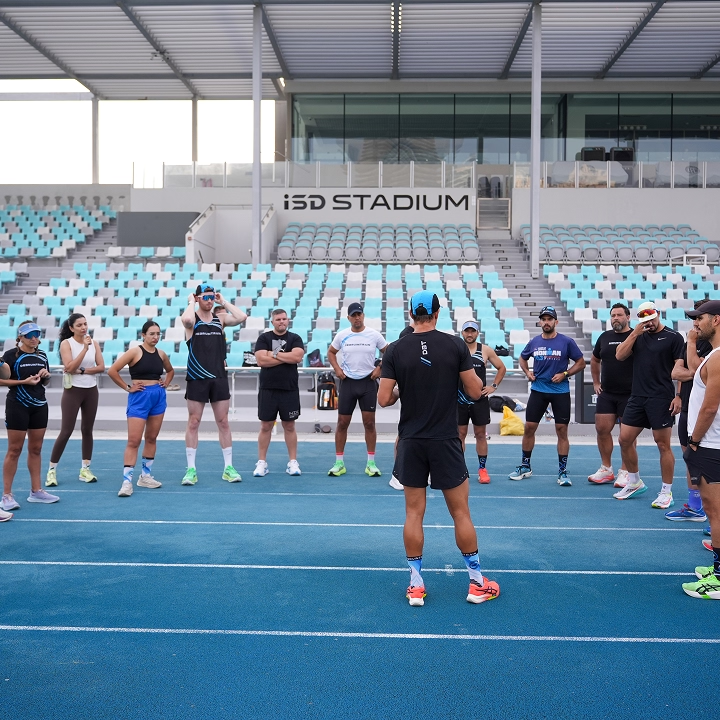
This guide explains how a UAE triathlon training camp can test race-day durability across open-water swimming, mountain cycling and post-bike running. It examines how Coach Gerhard de Bruin uses concentrated training in Khorfakkan to identify performance limiters and turn the findings into more precise pacing, fuelling and training decisions.
Current De Bruin Train UAE Camps
| Camp | Dates | Current focus |
|---|---|---|
| Khorfakkan Training Camp | 19–22 November 2026 | Race preparation, open-water skills and high-intensity bike and run work |
| Khorfakkan Training Camp | 14–17 January 2027 | Early-season endurance, climbing and discipline-specific execution |
| Khorfakkan Training Camp | 11–14 March 2027 | Endurance development , technique and structured recovery |
Dates, availability and final programmes should be confirmed with De Bruin Train before booking.
A triathlon training camp should not be judged by total kilometres or by how exhausted the athlete feels at the end of it. For a competitive triathlete, its value lies in what this kind of concentrated training reveals: where their performance deteriorates, which of their limitations prevents further progress and what they should change after the camp has finished.
De Bruin Train’s current UAE training camps are held in Khorfakkan, which is within reach of athletes traveling from Dubai. The location is deliberate. Open water availability, sustained climbing through the Hajar Mountains and varied running terrain create demands that are difficult to reproduce during a normal Dubai training week.
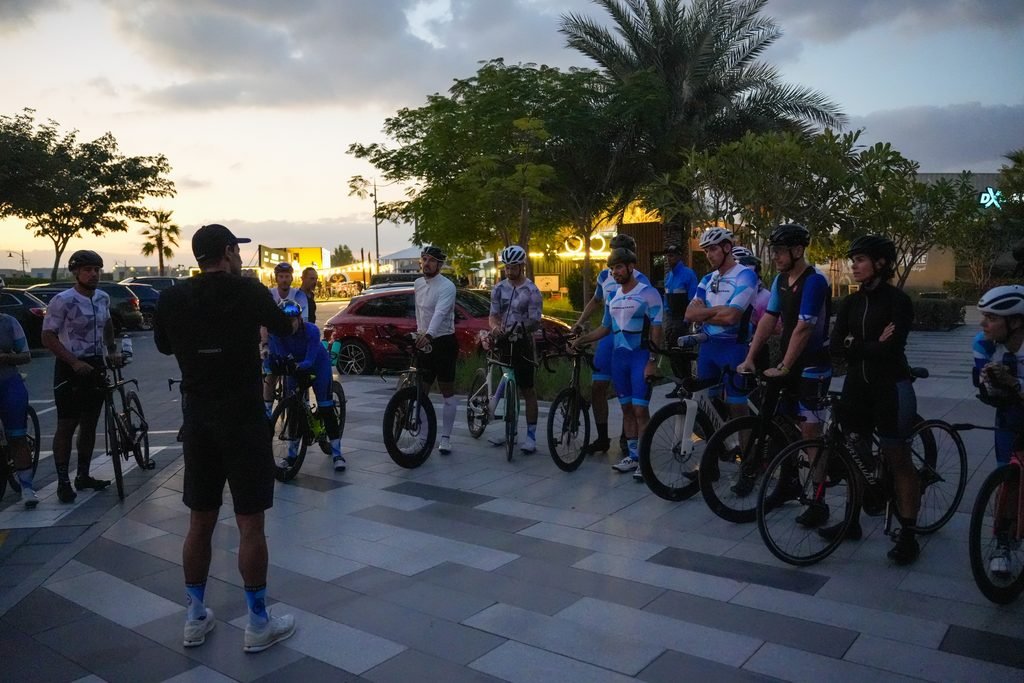
The objective is to let Coach Gerhard de Bruin observe how technique, pacing, fueling and movement respond when stress is repeated across several days.
A High-Performance Camp Should Begin With a Question
Competitive athletes do not need four generic days of swimming, cycling and running. They need answers that will help improve their skill level. Does swim technique survive navigation and contact? Does bike power remain useful once gradient and fatigue change? Can the athlete run with stable mechanics after accumulated climbing? Is the fueling plan still practical under compressed recovery?
Coming into a camp without a defined question, athletes can often leave knowing only that they survived a heavy block without even having gained any valuable answers. That does not establish whether the block addressed the actual limiter or simply added fatigue to their load.
Coach de Bruin will first try to understand the athlete’s training history, current load, performance data, injury considerations and target event. The camp can then test an existing hypothesis rather than randomly searching for a weakness without any involved strategy behind it.
Why Khorfakkan Offers More Than Another Training Week in Dubai
Dubai provides an excellent training base, but Khorfakkan changes the stimulus. Its open waters and mountain terrain remove the predictability and familiarity of pool sessions, flat cycling and repeated routes.
Limitations are not always easily noticed under stable conditions. An athlete may hold strong power indoors but lose efficiency when cadence changes on a climb. A capable pool swimmer may waste energy navigating and holding position in open waters. A strong runner may lose mechanics after climbing changes the muscular cost of the bike.
The terrain therefore acts as a diagnostic tool. It shows whether the athlete can transfer “laboratory” values and controlled-session fitness into a less predictable environment.
This approach also remains relevant for flatter races. Climbing can expose force-production, pacing and positional weaknesses hidden on steady routes. The purpose is not to create a mountain specialist but to identify what becomes unstable when the demand changes.
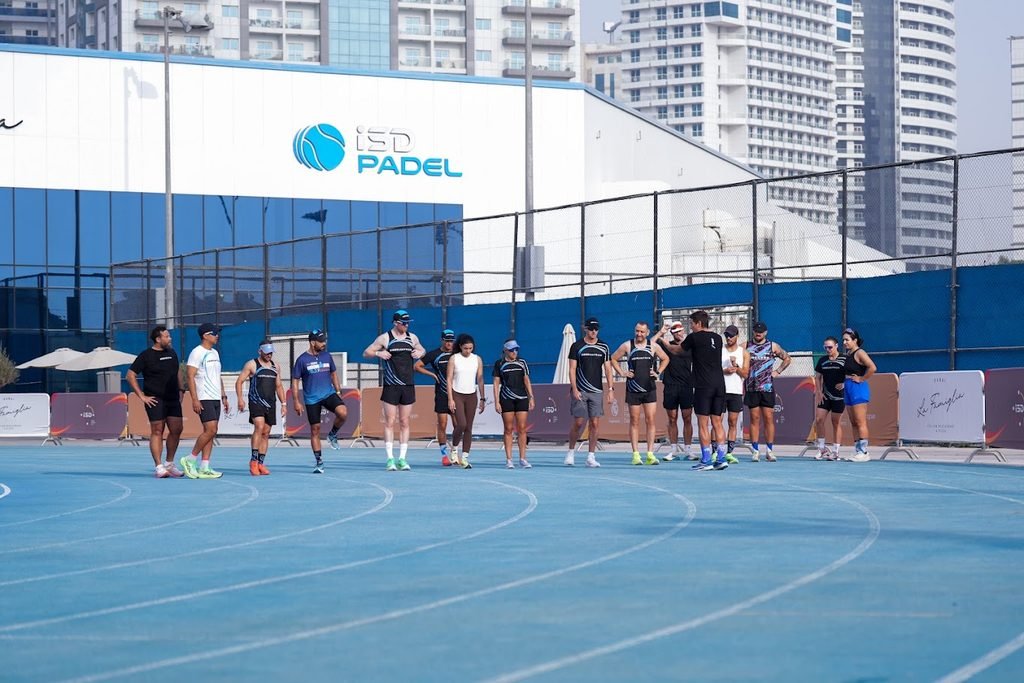
What the Triathlon Training Camp Dubai Should Reveal
- Whether Swim Technique Survives Race-Like Disruption: Pool pace does not show whether the athlete preserves technique and decision-making through sighting, contact, drafting and changes in rhythm, especially compared to open waters.
- Whether Bike Output Is Durable Outside Controlled Conditions: Average or normalized power can hide unnecessary surges, lost cadence control and postural changes. These observations show whether planned race output is repeatable rather than achievable once.
- Whether the Run Reflects Fitness or Residual Bike Cost: A poor post-bike run may reflect excessive bike variability, fueling, muscular damage or an unsustainable position. Consecutive sessions help identify when mechanics change and what created the deterioration.
- Whether Recovery Matches the Athlete’s Ambition: Sleep, appetite, soreness, readiness and training response indicate whether the athlete is absorbing the work and effort. Completing every session has little value when accumulated fatigue prevents useful execution come the day of the marathon.
More Training Is Not Automatically Better
Camp environments encourage athletes to chase stronger riders or exceed the session’s purpose. That may misleadingly make the camp feel successful, while potentially reducing the quality of the evidence collected towards the end of it. The point of joining a training camp isn’t to over-exert yourself but rather to gain evidence of where your skill is lacking and pivot that into a strategy you can use going forward to become better.
Coach de Bruin must control the relationship between stress and information. Some athletes need more load to expose a durability limitation; others reveal it early and gain little from continuing through to the end. Group structure should not override the individual prescription that a singular athlete can benefit from.
Close to a priority event, the correct camp can confirm an athlete’s readiness. The wrong load can interrupt race-specific preparation and create unresolved fatigue that leads to race-ready consequences closer to the race day. This scenario needs to be avoided. This is where Coach Gerhard’s skill shines in strategically deciding on what an athlete’s appropriate load would be.
The Triathlon Training Camp Must Change What Happens Next
The strongest measure of a camp is the quality of the decisions made afterwards. Outcomes may include revised bike power, different cadence or climbing work, a changed fueling protocol, swim-positioning practice, altered recovery or a new race rehearsal.
Further VO₂ Max, INSCYD, Moxy, biomechanical or athlete-profile testing may be appropriate when performance raises a specific question. It should not be added merely to make the camp appear technical.
The post-camp programme should reflect what the coach observed under accumulated stress. Otherwise, the camp becomes an isolated block rather than part of a coherent and strategic plan.
COACH GERHARD INSIGHT NEEDED: What do you provide after the camp, and which findings most commonly lead you to change an athlete’s programme, race pacing or testing priorities?
What De Bruin Train Camps Include
Current information lists accommodation, meals, coaching, road support, nutrition planning, workshop support and performance analysis. Group sizes are limited.
Exact inclusions may vary from camp to camp. Athletes should confirm the programme, pricing, accommodation format, equipment requirements and expected fitness level before reserving a place.
Each camp is led by Coach Gerhard de Bruin, an expert cycling trainer who uses athlete data and observed performance to provide individual, race-relevant feedback.
Is a De Bruin Train Camp the Right Next Step?
A camp is most useful when the athlete has a defined objective and needs concentrated coaching to resolve uncertainty around durability, open-water execution, climbing, post-bike running or recovery.
For athletes traveling from Dubai, Khorfakkan should be a controlled performance environment that reveals which numbers remain reliable outside the laboratory and which parts of the race plan still depend on assumptions.
Find the Right UAE Triathlon Training Camp
Coach Gerhard de Bruin and the De Bruin Train team provide structured UAE training camps for athletes preparing for competitive triathlon, IRONMAN 70.3, T100 and full-distance racing.
Frequently Asked Questions
Where are De Bruin Train’s triathlon camps held?
The current UAE camps are held in Khorfakkan on the UAE’s east coast. They are suitable for athletes travelling from Dubai but should not be described as taking place in Dubai itself.
What should a competitive athlete bring to camp besides equipment?
Athletes should bring relevant training history, recent performance files, target-event information, current fuelling practices and any known injury or recovery concerns. This gives the coach a basis for interpreting what happens during camp.
How is a high-performance camp different from a high-volume training block?
A high-volume block primarily increases workload. A high-performance camp uses concentrated training to answer specific questions about durability, technique, pacing, fuelling, recovery and athlete-course compatibility.
Can a Khorfakkan camp help an athlete preparing for a flat race?
Yes. Variable terrain can reveal pacing, force-production, cadence and positional limitations that remain hidden during steady flat riding. The findings can then inform preparation for a flatter event.
How close to a race should an athlete attend camp?
There is no universal interval. It depends on the athlete’s training history, recovery rate, camp load and race priority. Coach de Bruin should determine whether the camp is being used for development, race-specific rehearsal or sharpening.
How should an athlete know whether the camp was successful?
Success should be measured through clearer coaching decisions: confirmed or revised pacing, identified limitations, better-executed race skills, adjusted fuelling or a more precise post-camp programme—not simply fatigue or the total distance completed.