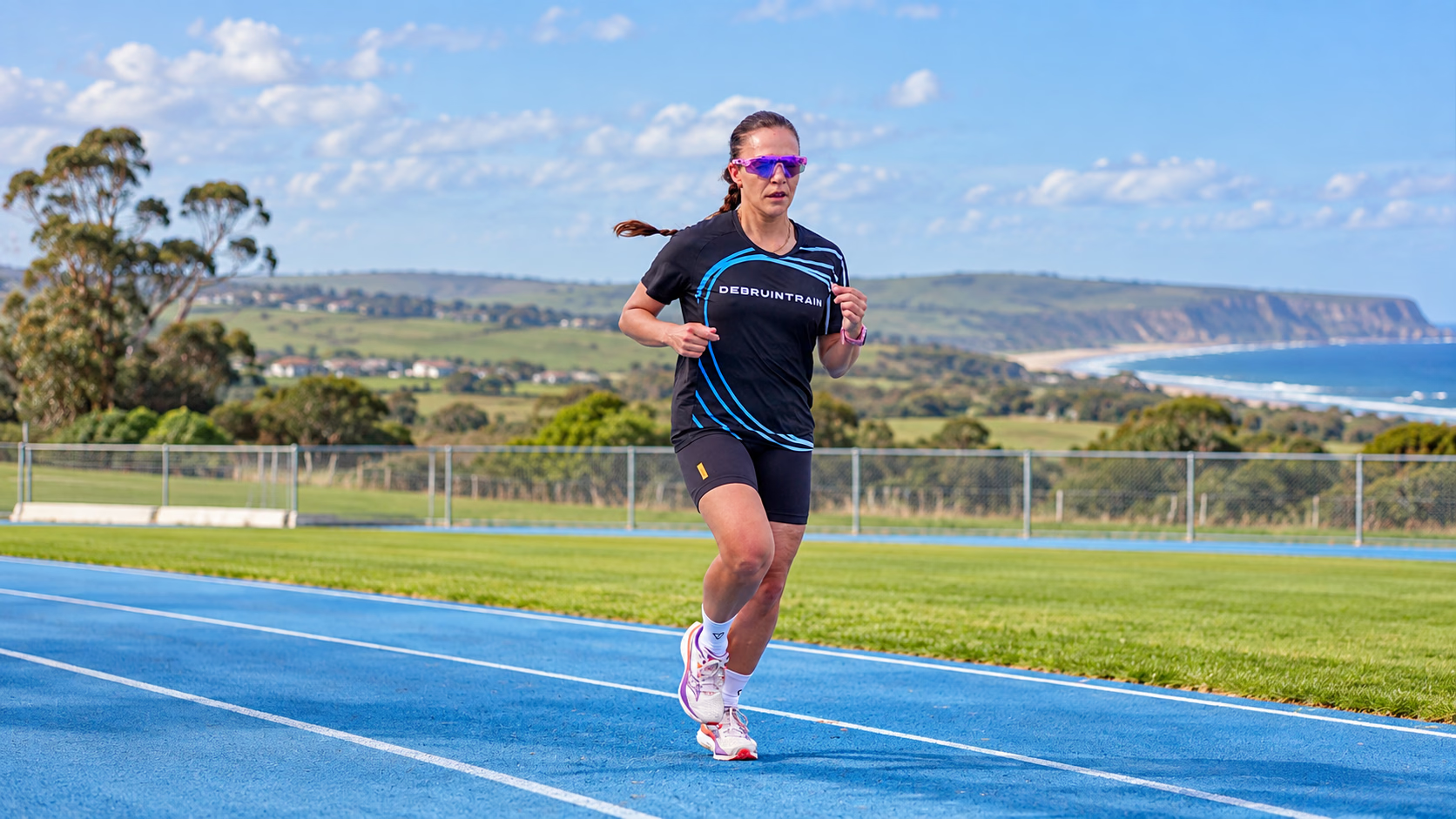
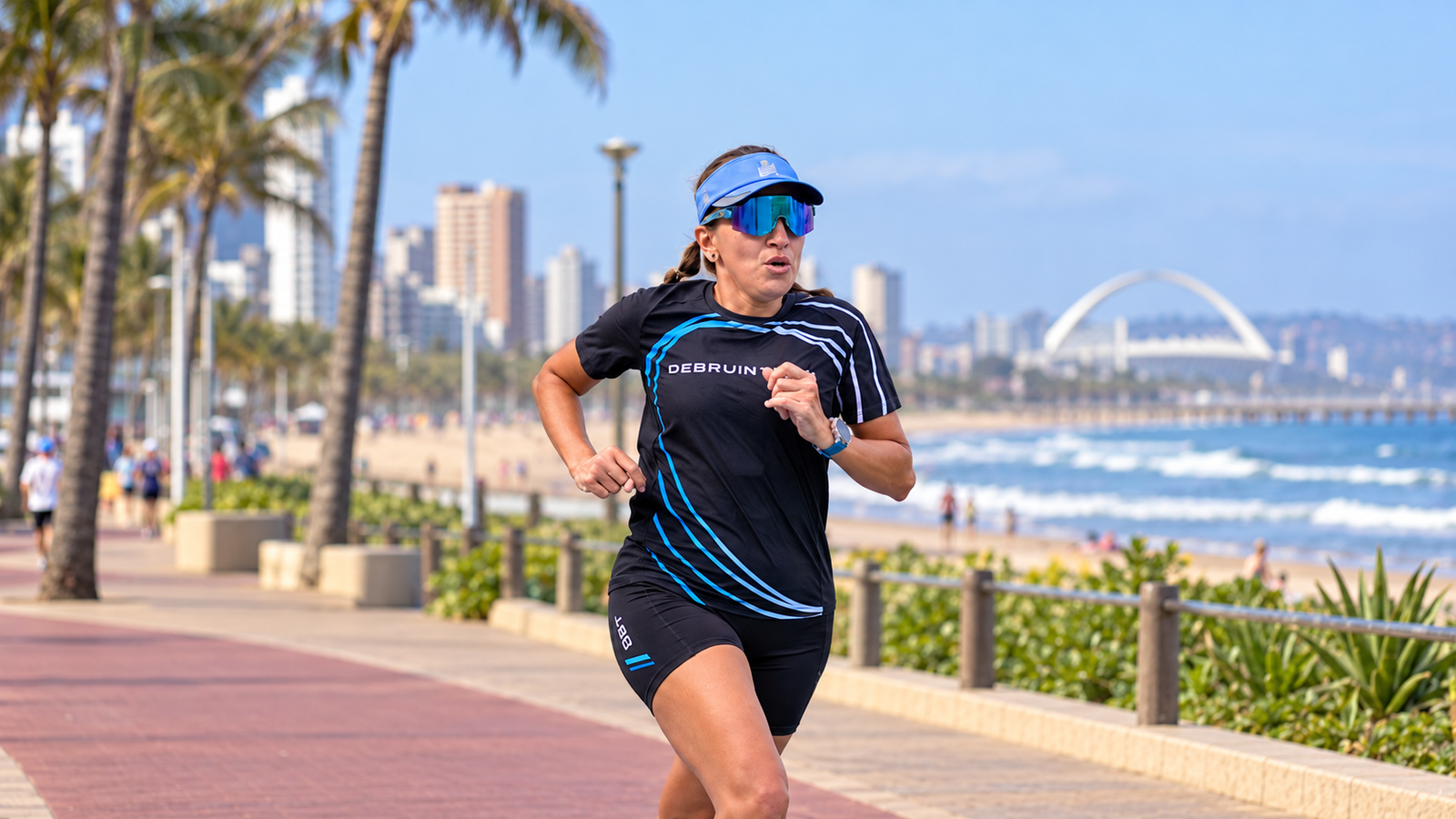
This guide explains how triathlon performance testing in Dubai can identify the physiological limiters behind an athlete’s FTP, VO₂max, Fatmax and metabolic profile. It shows how Coach Gerhard de Bruin converts test results into individual decisions about training intensity, race pacing, fueling and performance development.
| Test or profile | What it can help examine | Decision it may influence |
|---|---|---|
| VO₂max test | Maximum aerobic capacity and response to increasing workload | Aerobic-development priorities and high-intensity prescription |
| Threshold assessment with the PPO ramp test | Sustainable cycling output under a defined protocol | Training zones, interval targets and initial race-power ranges |
| Fatmax assessment with INSCYD | The intensity at which fat oxidation is highest | Low-intensity prescription and fuelling investigation |
| Metabolic profile via INSCYD | Interaction between aerobic capacity, glycolytic activity, thresholds and fuel use | The athlete’s primary limiter and the type of work most likely to change it |
| Moxy testing | Local muscle-oxygen response during exercise | Whether oxygen delivery or muscular utilisation warrants further attention |
Triathlon performance testing should do more than produce an FTP, Fatmax or VO₂max score. Its purpose is to identify what limits the athlete, determine which training stimulus is missing and establish whether the current race plan is physiologically realistic. This guide explains how Coach Gerhard de Bruin uses testing in Dubai to turn metabolic and performance data into individual training decisions.
Start With the Decision, Not the Test
Athletes often book testing to learn whether a number increased. That turns the test into a leaderboard rather than a diagnostic tool.
The better starting point is a decision the athlete and coach cannot yet confidently make. Is threshold power limited by aerobic capacity, glycolytic contribution or durability? Does the athlete need more low-intensity development? Is an aggressive 70.3 bike target sustainable without sacrificing the run?
The appropriate test depends on the question.
It’s very hard to test an athlete if they are unfit. It’s best to train constructively for a block before you conduct the test which results in showing me what I already knew. You are unfit.
– Coach Gerhard de Bruin
VO₂max Defines Capacity, Not Complete Race Performance
VO₂max describes the highest rate at which the body can use oxygen during maximal exercise. It is an important marker of aerobic capacity, but it does not independently explain how effectively an athlete converts that capacity into sustainable race output.
Two triathletes can record similar VO₂max values and perform differently because their thresholds, economy, fatigue resistance and glycolytic characteristics differ. In competitive cyclists, threshold power may relate more closely to time-trial performance than VO₂max alone.
For Coach de Bruin, the useful question is therefore not simply whether VO₂max is high. It is whether aerobic capacity is the factor that is currently restricting the athlete’s target performance. If it is not, repeatedly prioritising VO₂max sessions may add strain without addressing the actual limiter.
Retesting should use sufficiently consistent conditions so the comparison reflects adaptation rather than a better score on a different day.

FTP Is Useful, but It Is Not a Complete Metabolic Profile
FTP remains practical for prescribing cycling sessions and tracking performance. The problem begins when athletes treat it as a fixed physiological truth or assume the familiar 95% of a 20-minute effort is interchangeable with every other threshold measure.
Studies in trained cyclists have found meaningful individual disagreement between 20-minute FTP, 60-minute FTP, critical power and individual anaerobic threshold. The protocol, pacing, familiarity and athlete’s anaerobic contribution can all influence the result.
An FTP result should therefore be recorded with its method and interpreted alongside the athlete’s power-duration profile, recent training and ability to sustain an aerodynamic position. A triathlete who can generate an impressive 20-minute value may still lack the durability to preserve appropriate output before a competitive run.
FTP indoor or outdoor are normally about 5% discrepancy. Its great reference to use, but when you start feeling the body with training your 80% today might be different to 80% two days later. So I don’t like it when athletes become slaves to numbers. Also summer months its tricky to stick to one FTP as heat affects muscle contraction.
– Coach Gerhard de Bruin

Fatmax Is Not a Universal Zone 2 Prescription
Fatmax is the intensity at which an athlete reaches their highest fat-oxidation rate. It can support more specific metabolic prescriptions.
It should not be reduced to a universal heart-rate percentage or treated as another name for Zone 2. Fatmax varies considerably between athletes, even those with similar aerobic capacity. It is also sensitive to test protocol, recent exercise, nutrition, fasting duration and other testing conditions.
Research has found substantial day-to-day variation, meaning a single result should be interpreted within a wider profile and under documented conditions.
For long-course triathletes, the practical value is not permission to underfuel. It is a clearer view of how fuel contribution changes with intensity. Race nutrition must still reflect duration, output, heat, gastrointestinal tolerance and tested intake capacity.
Ideally improving fatmax will be done off season so that you don’t have to enforce too much intensity (20%) This allows for a good base along some high end work which are part of the reverse periodization model we adapted.
– Coach Gerhard de Bruin

Metabolic Profiling Explains How the Numbers Interact
A metabolic profile is valuable because endurance performance is created by several systems interacting, not by one isolated score. De Bruin Train offers INSCYD testing with coach feedback, alongside laboratory-standard VO₂max testing in Dubai.
An INSCYD profile can include VO₂max, VLamax, Fatmax, thresholds and substrate utilisation. VLamax represents maximum glycolytic activity. The appropriate balance depends on whether the event rewards short, hard responses or prolonged economical output.
This is why “higher” is not the correct goal for every metric. The desired profile depends on whether the athlete races sprint, Olympic, T100, 70.3 or full-distance events, how the course behaves and where the athlete currently loses performance.
Racing short distance need the ability to clear and handle lactate acid better. Longer racing is all about lowering the Vlamax and durabilty.
– Coach Gerhard de Bruin
The Report Is Not the Finished Product
Performance testing has commercial value only when it changes the programme. After interpretation, the athlete should understand:
- which quality is currently limiting the target event
- which sessions will address it
- how intensity and recovery will be prescribed;
- whether race pacing or fuelling requires revision;
- when retesting would provide a meaningful comparison.
Retesting too frequently can turn normal variation into false urgency; waiting too long leaves the coach using an outdated profile. Timing should follow the expected adaptation and next coaching decision.
Triathlon Testing Options in Dubai
De Bruin Train currently lists laboratory-standard VO₂max testing, INSCYD metabolic testing with feedback, Moxy testing and a combined performance profile. The full profile combines VO₂max, INSCYD, data. Coach Gerhard de Bruin holds a sports-science and psychology degree and is qualified in INSCYD testing. His role is not simply to administer the assessment but to decide which data matters for the athlete’s event and convert it into training and race decisions.
Choose the Right Triathlon Performance Test
Discuss which triathlon performance test is appropriate for your current objective.
Triathlon Performance Testing FAQs
Which performance test should a triathlete complete first?
It depends on the unresolved coaching question. An athlete investigating aerobic capacity may require VO₂max testing, while an athlete needing a wider explanation of threshold, glycolytic activity and fuel use may benefit more from metabolic profiling.
Is FTP the same as anaerobic threshold or critical power?
No. The measures may correlate, but research shows that they should not automatically be used interchangeably for an individual athlete. The testing protocol and definition must accompany the result.
What does Fatmax tell a long-course triathlete?
Fatmax identifies the intensity associated with peak fat oxidation under the test conditions. It can inform low-intensity training and fuelling investigation, but it does not independently determine race pace or remove the need for carbohydrate intake.
Can two athletes with the same VO₂max need different training?
Yes. Threshold, economy, glycolytic activity, substrate use, durability and race demands can differ substantially despite similar VO₂max results.
How often should performance testing be repeated?
Retesting should follow a training block long enough to produce the expected adaptation and should occur when the result will influence a new decision. The interval should be individual rather than calendar-driven.
How much does triathlon performance testing cost in Dubai?
De Bruin Train currently lists VO₂max testing at AED 1,200, INSCYD testing with feedback at AED 2,200, Moxy testing at AED 1,000 and a full profile at AED 4,000. Prices exclude VAT and should be confirmed directly before booking.