This guide explains why IRONMAN 70.3 Durban’s reputation as a fast course can conceal its demands on fatigue resistance, pacing discipline and aerodynamic durability. It shows how competitive athletes can use race-specific testing and controlled execution to pursue a PB, podium or World Championship qualification slot.
| Date | Sunday, 6 June 2027 |
|---|---|
| Location | Durban, KwaZulu-Natal, South Africa |
| Swim | 1.9km ocean swim at uShaka Beach |
| Bike | 90km across two fast, undulating laps |
| Run | 21.1km across three promenade laps |
| Qualification | Slots for the 2027 IRONMAN 70.3 World Championship |
| Important note | Final maps, start procedures and operational details should be confirmed in the 2027 athlete guide. |
IRONMAN 70.3 Durban returns on Sunday, 6 June 2027, with a 1.9 km ocean swim at uShaka Beach, a 90 km two-lap bike course and a 21.1 km three-lap run along Durban’s beachfront promenade. The race also offers qualifying slots for the 2027 IRONMAN 70.3 World Championship.
Durban is regularly presented as a fast race. For a competitive athlete, that can be misleading. A course with few obvious reasons to slow down creates sustained pressure to keep producing speed. Small errors in position and power control, which may be repeated until the athlete reaches the run with less capacity than the bike split suggests, could become detrimental to optimal race outcomes. The defining question is whether they can preserve the mechanics and metabolic control that created their speed through two exposed bike laps and three increasingly costly run laps.
Durban Rewards Speed That Can Be Repeated
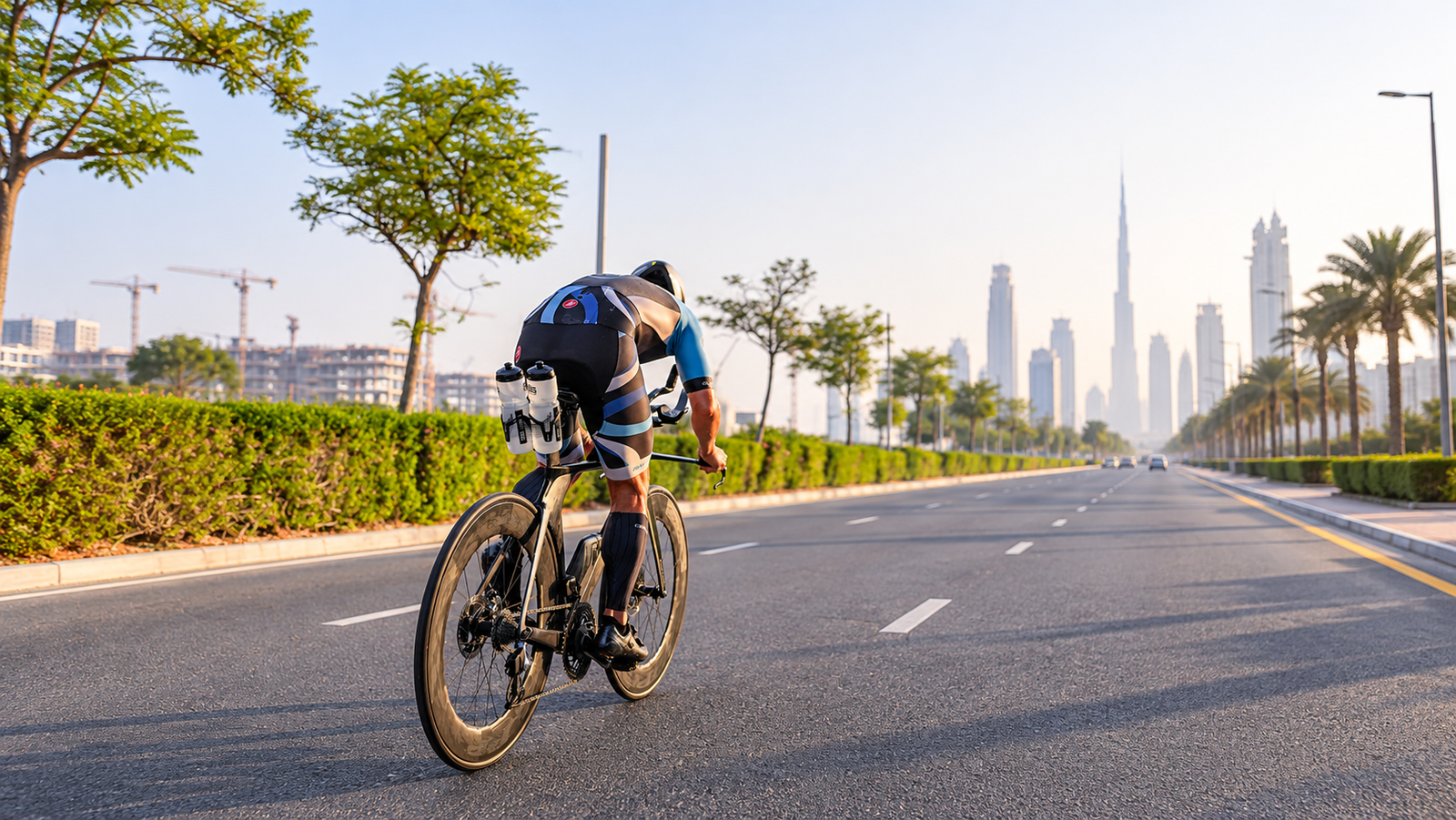
A technical or mountainous course tells an athlete where restraint is required. Durban may not make that warning as obvious. The bike invites continuous output, while the two-lap format gives athletes repeated exposure to the same changes in gradient, wind direction and road position as the day leads on.
Two athletes can finish a race-specific bike session with the same normalized power but have very different prospects for the half-marathon. The athlete who accumulates greater variability, repeatedly leaving the aerodynamic position or showing deteriorating movement under load, has paid more for the same headline number.
This is where a simple percentage of FTP becomes insufficient. It does not show how well the athlete preserves posture, fuels at speed or runs after producing that power for the required duration.
The New Swim Start Changes More Than the First 1.9 km
The 2027 event moves the swim to the harbor-wall side of uShaka Pier, with athletes exiting at uShaka Beach. Until the final course and start procedure are published, athletes should avoid pretending that an older swim file provides exact answers.
The useful question is how the athlete responds when the opening minutes do not unfold cleanly. Acceleration, contact and sighting corrections impose a cost that will never appear in the bike file. Gerhard must identify which athletes benefit from fighting for position and which lose more than they gain by repeatedly closing gaps.

The Second Bike Lap Is the Real Test
The first lap can be misleading for an athlete. Their position may feel sustainable, while they may not have yet missed their fueling, and they may appear to be controlling an optimistic target at that time. The second lap reveals whether their speed is durable.
A Durban-specific rehearsal should compare two course-relevant cycles. Coach de Bruin can examine whether power becomes more variable, aerodynamic-position time falls or heart rate separates from output. The aim is to identify when the athlete’s posture and output stop being economical.
This matters for powerful cyclists chasing a podium or World Championship slot. Passing athletes does not prove the effort is affordable. Position at T2 matters only if it can be defended over 21.1 km. Wind should also change the calculation: chasing expected speed into a headwind can destroy an otherwise sound power plan.
A Three-Lap Run Punishes Emotional Pacing
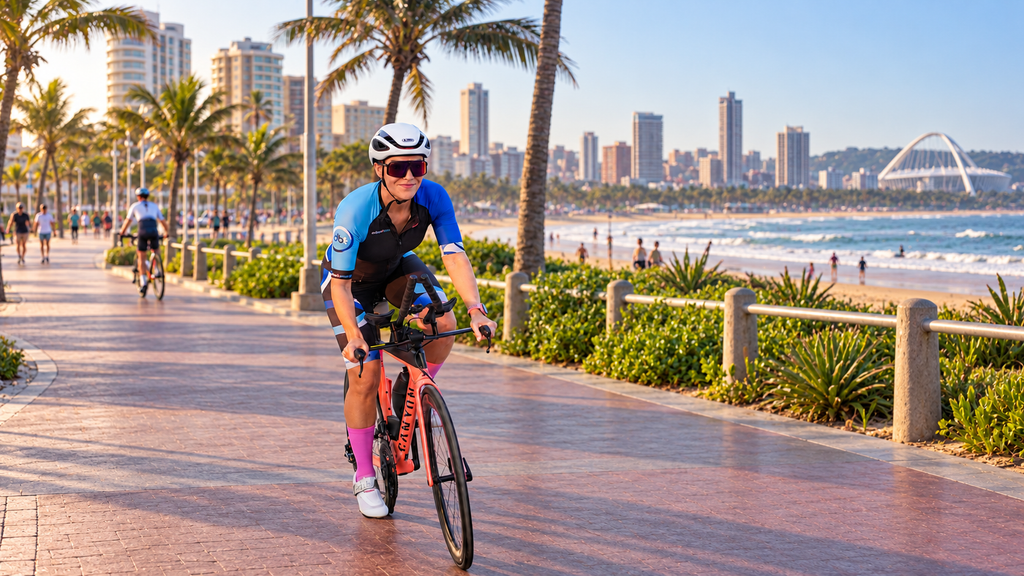
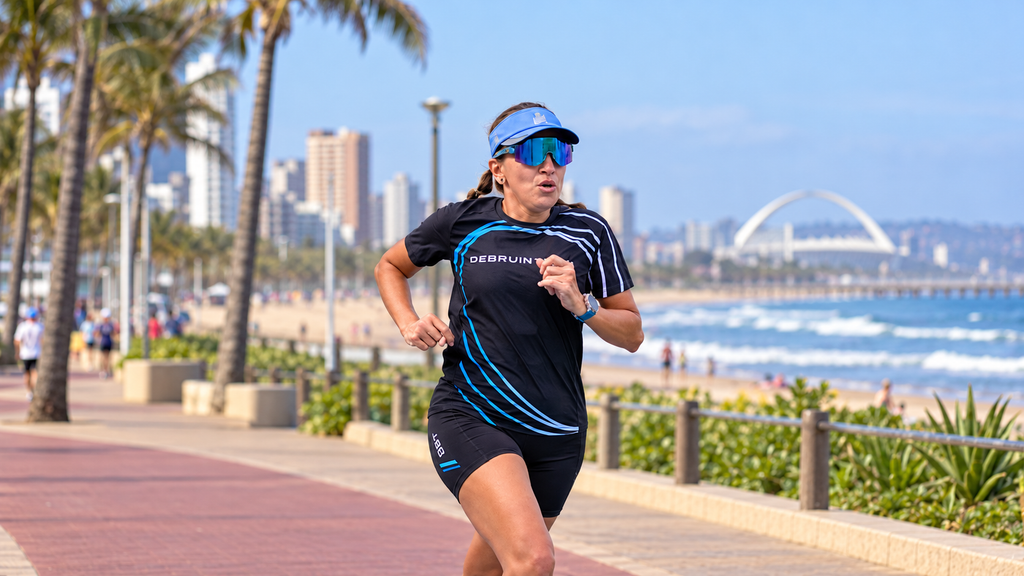
Durban’s promenade run creates frequent feedback from competitors, splits and familiar landmarks. That can help disciplined athletes, but it also encourages racing other people before the planned pace is physiologically available.
The first lap should confirm control rather than prove fitness. The second will expose the bike cost. By the third lap, athletes will be working with whatever capacity their earlier decisions have preserved.
A qualification attempt needs pre-established decision points using lap pace, physiological response, movement quality and age-group position. These separate a justified tactical move from an emotional response to being passed through.
The Sessions That Should Decide the Race Plan
Durban preparation should culminate in a small number of decisive tests rather than a generic final simulation.
1. Two-Cycle Bike Durability Test
Reproduce two comparable blocks inside a race-duration ride. Compare power control, physiological response, cadence, aerodynamic-position time and fueling between the cycles to expose deterioration hidden by the overall average.
2. Position-to-Run Transfer Session
Complete a sustained race-position effort followed by a controlled run that progresses only if mechanics and physiological responses remain stable. This tests whether the aerodynamic target is functional rather than merely achievable.
3. Three-Lap Decision Run
Structure a post-bike run as three laps with separate objectives: control, assessment and competition. This rehearses delaying tactical racing until the athlete has enough evidence to justify it.
Durban’s Athlete Verdict
Durban suits athletes with strong sustained power, an economical aerodynamic position and the discipline to separate speed from effort. It exposes those whose bike numbers depend on positional relief, whose pacing becomes reactive in wind or whose run plan ignores the bike’s residual cost.
The final strategy should be based on race-position durability, repeatable bike execution and post-bike running—not the course’s reputation. For a PB, podium or World Championship attempt, the target is not the most aggressive number that is defensible on paper. It is the fastest complete race the athlete can still execute when Durban begins collecting the cost of every earlier decision.
Prepare for IRONMAN 70.3 Durban With Coach de Bruin
Coach Gerhard de Bruin provides individualised triathlon coaching for athletes in Dubai, across the UAE, South Africa and worldwide. Preparation can include performance-data analysis, race-specific testing, TrainingPeaks programming and qualification-focused strategy.
Frequently Asked Questions
When is IRONMAN 70.3 Durban 2027?
IRONMAN 70.3 Durban takes place on Sunday, 6 June 2027, in Durban, KwaZulu-Natal.
What is changing for the 2027 Durban 70.3 swim?
IRONMAN South Africa has announced a new swim venue on the harbour-wall side of uShaka Pier, with athletes exiting at uShaka Beach. Athletes should use the final 2027 course map and athlete guide for the confirmed route and start procedure.
Is IRONMAN 70.3 Durban a fast course?
It can produce fast racing, but repeated laps and coastal exposure reward athletes who preserve their aerodynamic position, control power variability and still run effectively.
How should competitive athletes set their Durban bike power?
FTP alone is insufficient. The target should also reflect fatigue resistance, power variability, aerodynamic durability, environmental response, fuelling and demonstrated run capacity.
What should athletes test before racing Durban 70.3?
Athletes should test whether they can repeat their execution across two bike laps, fuel in race position and preserve their run mechanics throughout a three-part brick session.
Does Durban 70.3 offer World Championship qualification?
Yes. The 2027 race offers qualifying slots for the 2027 IRONMAN 70.3 World Championship. Athletes should confirm the final slot allocation and roll-down procedure in the official race information.